
Chicago Personal Injury Lawyer
Award-Winning Chicago Personal Injury Lawyer - Securing Justice
for Illinois Injury Victims - Over $450 Million Recovered



Bicycle riders face serious risks when involved in bicycle crashes with motor vehicles or when accidents occur on bike lanes or bicycle paths. Some of the most common bicycle accident injuries range from soft tissue damage to traumatic brain and spinal cord injuries, some of which may require multiple surgeries and long-term care.
If you have suffered cycling injuries, it is essential to seek medical attention immediately. The Chicago bicycle crash attorneys at Rosenfeld Injury Lawyers can help you recover compensation for medical expenses, lost wages, and other damages.
Chicago has significantly invested in bike lanes, paths, and infrastructure to improve bicycle safety. With a growing network of protected lanes and designated cycling areas, the city encourages more people to use biking for transportation and recreation. However, despite these improvements, cycling accidents remain a serious concern.
Bicycle injuries often occur due to collisions with other vehicles, dooring incidents, or hazardous road conditions. Even in marked bike lanes, distracted or aggressive drivers pose a significant risk, leading to severe injuries such as broken bones, head injuries, and spinal cord injuries.
While wearing a bicycle helmet and using protective gear like cycling gloves can help reduce the severity of cycling-related injuries, they cannot prevent all accidents. Bicycle riders should remain aware of their surroundings and understand the most common cycling injuries so they can recognize when to seek treatment after an accident.

Bicycle accidents in Chicago can result in a wide range of injuries, depending on the type of crash.
Dooring accidents occur when a driver or passenger opens a car door into a bicycle rider’s path, causing a sudden collision. Right-hook accidents happen when a motor vehicle driver turns right into a cyclist traveling in the same direction, while left-hook accidents occur when a driver turns left across an oncoming cyclist’s path.
Cyclists are also vulnerable to hit-and-run accidents, rear-end crashes, and falls due to hazardous road conditions.
These bicycle injuries can range from soft tissue and road rash injuries to broken bones, spinal cord injuries, and traumatic brain injuries. Understanding these cycling injuries can help riders recognize when to seek treatment and take precautions to reduce their risks.
One of the most common bicycle accident injuries involves the head and brain, especially when cyclists are thrown from their bikes or strike the pavement. These injuries can range from mild to life-threatening, catastrophic injuries.
In severe cases, TBIs can cause permanent scarring, memory loss, mood disorders, and chronic headaches. Immediate treatment is necessary after any head injury to prevent long-term complications.
A bicycle helmet can help reduce the risk of head injuries, but it cannot prevent all other injuries. Even with a helmet, cyclists may suffer from severe trauma after a bicycle accident.
Bicycle accidents often result in facial injuries, especially when a cyclist is thrown forward and lands on their face.
Cyclists should always seek treatment after such injuries to prevent infections and minimize long-term damage.
In bicycle accidents, the force of impact can cause severe neck and back injuries, including:
These severe and acute injuries often require physical therapy, pain management, or even surgical intervention.
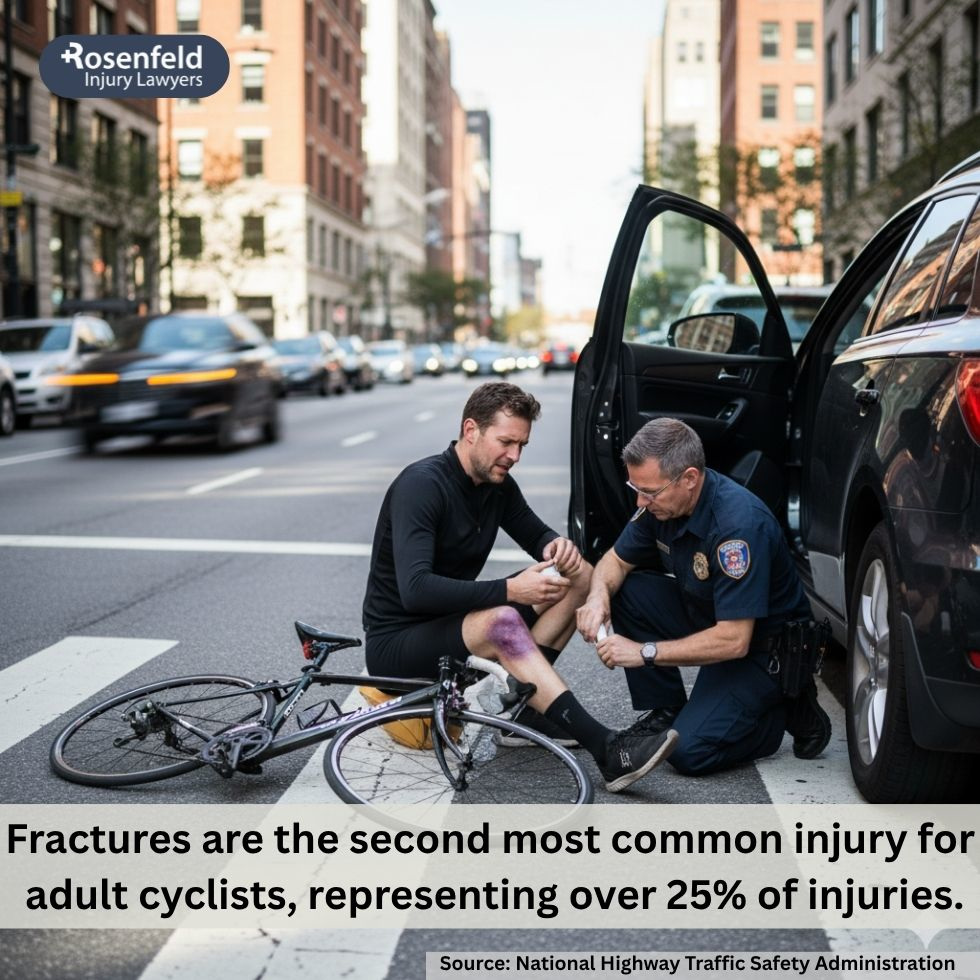
Cyclists instinctively extend their arms during a fall, which can lead to upper body bicycle-related injuries, including:
Wearing cycling gloves can help alleviate pressure on the hands and wrists, reducing the risk of median nerve damage.
The legs, knees, and feet absorb much of the impact in a bicycle accident, leading to serious injuries, including:
These and overuse injuries often require physical therapy, braces, or even multiple surgeries for full recovery.
Impact with a motor vehicle or the pavement can lead to serious injuries in the chest and abdomen, including:
Chest and abdominal injuries often require urgent medical treatment to prevent life-threatening complications.
Soft tissue injuries are among the most common bicycle injuries, including:
Even minor injuries can lead to severe infections if debris remains in the wound. Immediate treatment can prevent complications and promote healing.
After a bicycle accident, seeking medical treatment as soon as possible is essential, even if injuries seem minor. Many bike accident injuries, such as head injuries, internal bleeding, and soft tissue damage, may not show symptoms right away due to adrenaline masking pain.
A prompt medical evaluation can also help document your bike crash injuries for a potential personal injury claim. Medical records provide crucial evidence when pursuing financial compensation for medical bills, lost wages, and long-term care needs.
Delaying medical treatment can lead to severe complications, especially in cases of traumatic brain injuries, spinal cord injuries, and fractures. Early diagnosis and intervention can prevent further damage and improve recovery outcomes.
Even for common cycling injuries like wrist pain or muscle strains, seeing a doctor ensures proper healing and reduces the risk of permanent damage.

If you or a loved one suffered bicycle accident injuries, Rosenfeld Injury Lawyers is here to help. Our experienced personal injury law firm in Chicago fights for injured cyclists to recover medical expenses, lost wages, and fair compensation for their pain and suffering. Whether you sustained head injuries, broken bones, or spinal cord injuries, we are ready to assist.
We work on a contingency fee basis, meaning you pay nothing unless we win your case. Call us at (888) 424–5757 or fill out our contact form to schedule a free consultation.
All content undergoes thorough legal review by experienced attorneys, including Jonathan Rosenfeld. With 25 years of experience in personal injury law and over 100 years of combined legal expertise within our team, we ensure that every article is legally accurate, compliant, and reflects current legal standards.