
Chicago Personal Injury Lawyer
Award-Winning Chicago Personal Injury Lawyer - Securing Justice
for Illinois Injury Victims - Over $450 Million Recovered



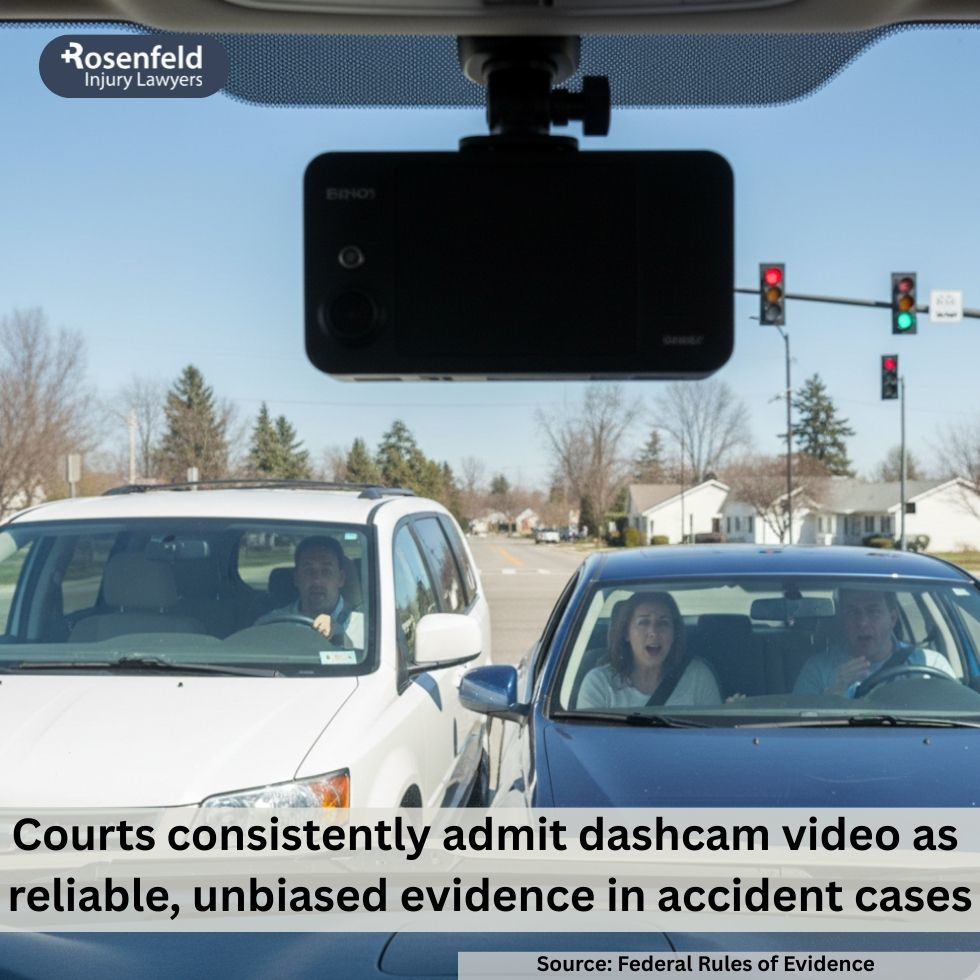
Dash cam footage provides clear video evidence that proves liability. This footage can make all the difference when accidents occur in quieter areas like Calhoun County, or even quiet Chicago streets in Back of the Yards or West Chicago. In general, the dashcam footage impact on car accident claims is a smoother insurance claims process and strong protection against fraudulent claims.
If you have legally obtained dash cam evidence, our car accident attorneys can help you review the footage and fight for maximum compensation. Contact us today for a free consultation.
Yes, dashcam footage can prove fault. This evidence effectively removes potential bias and avoids common issues with inaccurate eyewitness accounts, such as misjudging which car turned first or misremembering license plates.
Dash cam recordings establish fault by demonstrating driver behavior, vehicle speeds, traffic signal status, angles of impact, and lane changes.
For example, if a driver ran a red light and hit another car, the driver responsible for the crash might insist the light was yellow. Without dashboard cameras, police reports only rely on witness statements. Other drivers may not have been watching the events leading up to the crash and may simply agree with the driver’s statements. With dash cameras, there is clear video evidence of this false claim.
The dash cam’s impact on legal proceedings is a double-edged sword. While having clear footage can potentially save you from being held liable by the other driver’s insurance company if you were not at fault, it can also be used by insurance companies to hold you liable.
Ensure you follow all rules of the road and promptly file a report after an accident to ensure that your dash cam footage supports your case rather than leading to higher insurance premiums.
Yes, dashcam footage is generally admissible in court. Illinois rules of evidence note that video evidence is admissible as long as it is unaltered, legally obtained, and authenticated.
However, Illinois privacy laws do not allow you to make audio recordings without the consent of other parties involved (720 ILCS 5/26-4). In other words, if your dash cam also records audio, you should disable this.
You also must ensure that your camera does not obstruct your line of sight, in accordance with Illinois’s legal requirements (625 ILCS 5/12-603.1). Most drivers place it behind their rearview mirror. This provides maximum effectiveness through an unimpeded line of sight while still complying with the law.
There is emerging case law about certain dashcam footage, namely AI-enabled dash cameras used by trucking companies. These cameras can use facial identification to track drivers, which is compelling evidence in a car accident claim.
The case Karling v. Samsara Inc. argued that certain cameras that collect biometric information violate the Biometric Information Privacy Act (740 ILCS 14/). A court declined to dismiss, and the AI-powered camera company settled, leaving the question unanswered.
While biometric identification may or may not be admissible, proof of fault can still be determined using camera footage, while medical records can prove damages.
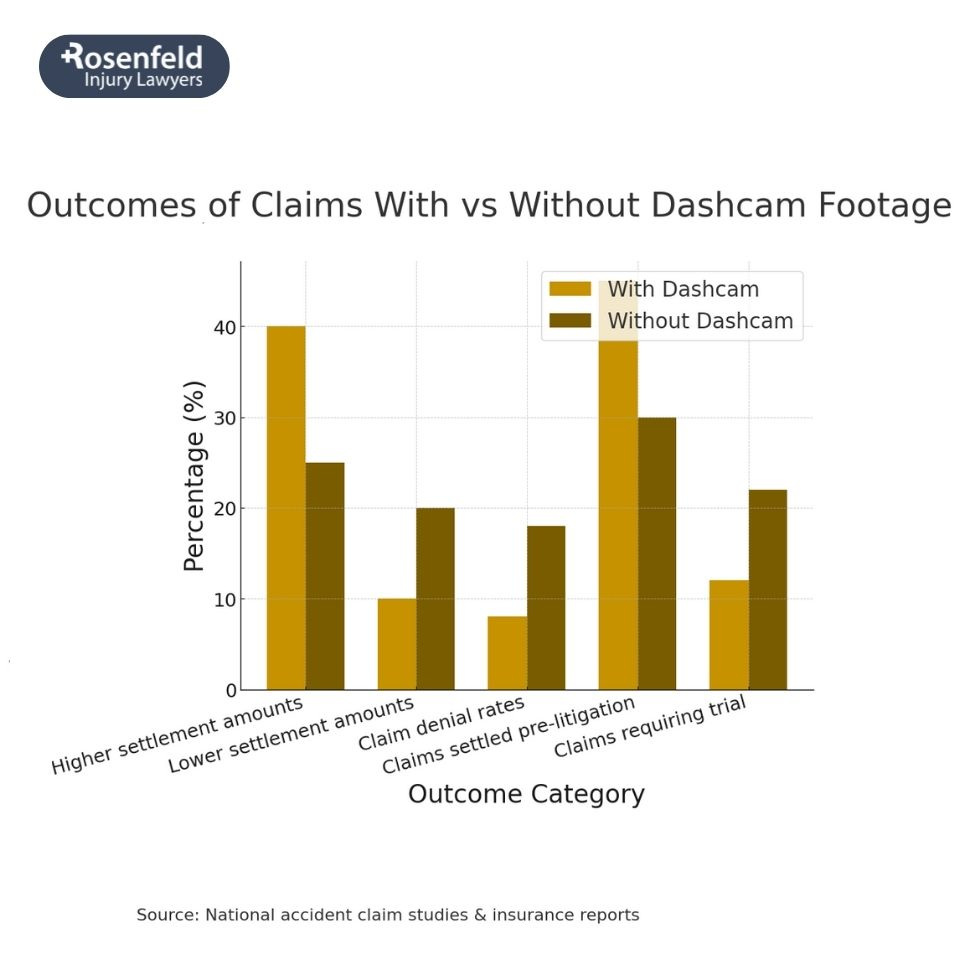
Dashcam footage is critical evidence that can significantly impact the insurance claims process, but only if you follow all local laws. Follow these steps both before and after your accident so that your legal team has the best chance of success.
Insurance providers do not typically provide discounts for having dashboard cameras. However, having clear evidence of fault after an accident can prevent your premiums from being unfairly raised. As such, evidence like this can save you thousands of dollars and is well worth the upfront investment.
Yes, having a car accident attorney review the raw footage is essential. Our personal injury law firm will use this video evidence, as well as other sources like traffic cameras, to reconstruct the accident scene.
Video analysis can identify speeds, angles of impact, and even other factors like distracted driving. When combined with police records, medical reports, and expert testimony, this footage offers powerful proof of fault.
We can prove that the at-fault driver was breaking local laws, such as exceeding 30 miles per hour on Chicago terrestrial roads (9-12-070), or failing to use turn signals as required by the Illinois Vehicle Code (625 ILCS 5/11-804).
Dash cams can be invaluable evidence for your car accident claim, but they must be analyzed by experienced personal injury attorneys familiar with evidentiary rules surrounding this technology. Our attorneys will preserve the evidence, work with accident reconstructionists to determine liability, and negotiate with insurance companies so that you receive full compensation.
Rosenfeld Injury Lawyers is a leading Chicago-based law office that has secured over $450 million for our clients, earning us a spot in the Million Dollar Advocates Forum. We work on a contingency fee basis: no fees unless we win.
Our team serves clients throughout Chicagoland and Illinois. To schedule a free consultation with our experienced accident lawyers, call us at (888) 424-5757 or use our online contact form.