Chicago Personal Injury Lawyer
Award-Winning Chicago Personal Injury Lawyer - Securing Justice
for Illinois Injury Victims - Over $450 Million Recovered



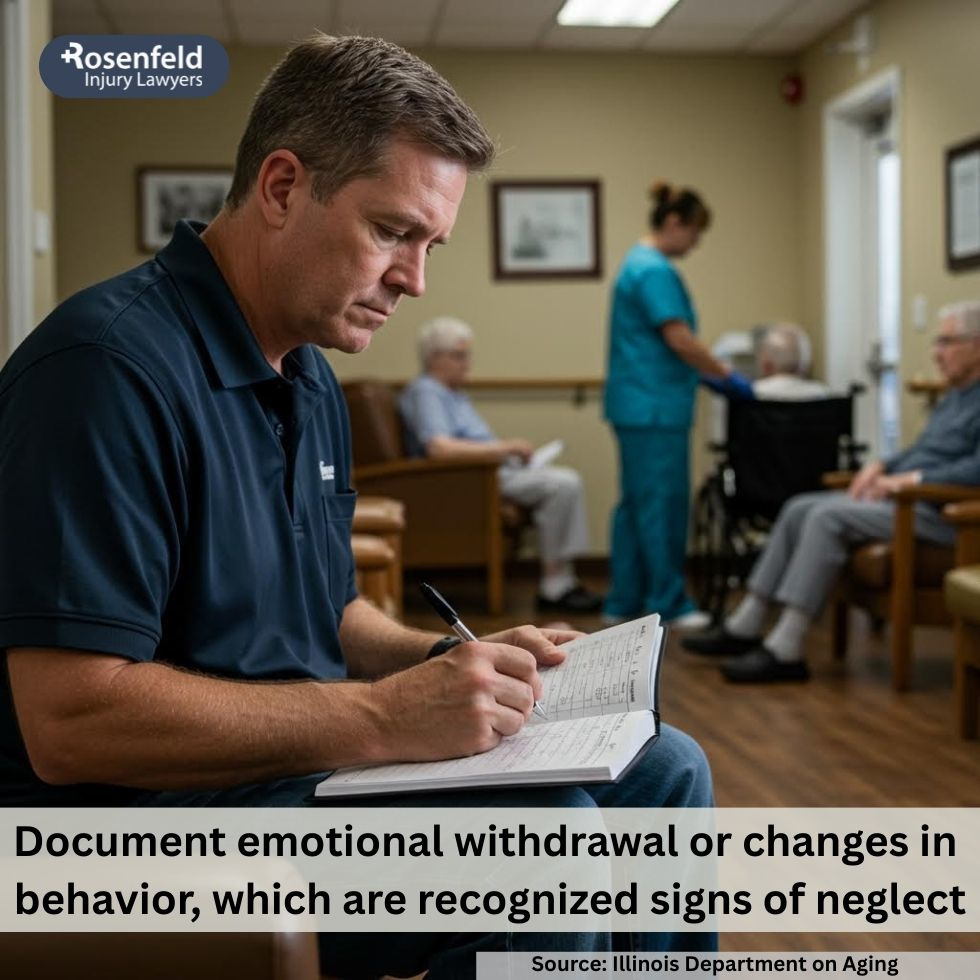
If your loved one has been subjected to elder abuse in a Chicago nursing or assisted living facility, it’s essential to act quickly. Our legal professionals will guide you through how to document neglect for a nursing home lawsuit, ensuring that you can seek financial compensation.
Contact a Chicago nursing home abuse attorney from our law firm today for a compassionate, free consultation about pursuing legal action.
Proving nursing home negligence requires providing a preponderance of evidence. This standard means that the evidence suggests it is more likely than unlikely that nursing home staff members mistreated or neglected a vulnerable resident.
Our attorneys will compare this documentation to state and federal laws surrounding nursing home care, including the Illinois Nursing Home Care Act (210 ILCS 45/) and the Federal Nursing Home Reform Act (Public Law No: 100-203), to demonstrate how the standard of care deviated from legal requirements.
Thorough documentation can make all the difference in whether your nursing home negligence case is successful or not. As such, family members should start gathering evidence as soon as possible, then consult with a nursing home abuse lawyer to start the process.
Unfortunately, nursing facility abuse can take many forms, which include physical harm, emotional abuse, sexual abuse, and financial exploitation. The National Institute on Aging outlines potential indicators of nursing home neglect, which include:
To document nursing home injuries, follow these steps:
Your contemporaneous documentation can be an invaluable way to prove nursing home negligence. Follow these steps to prove that your loved one suffered abuse.
Be sure to remain factual and specific in your observations. You can then provide this to legal authorities or to your personal injury lawyer.
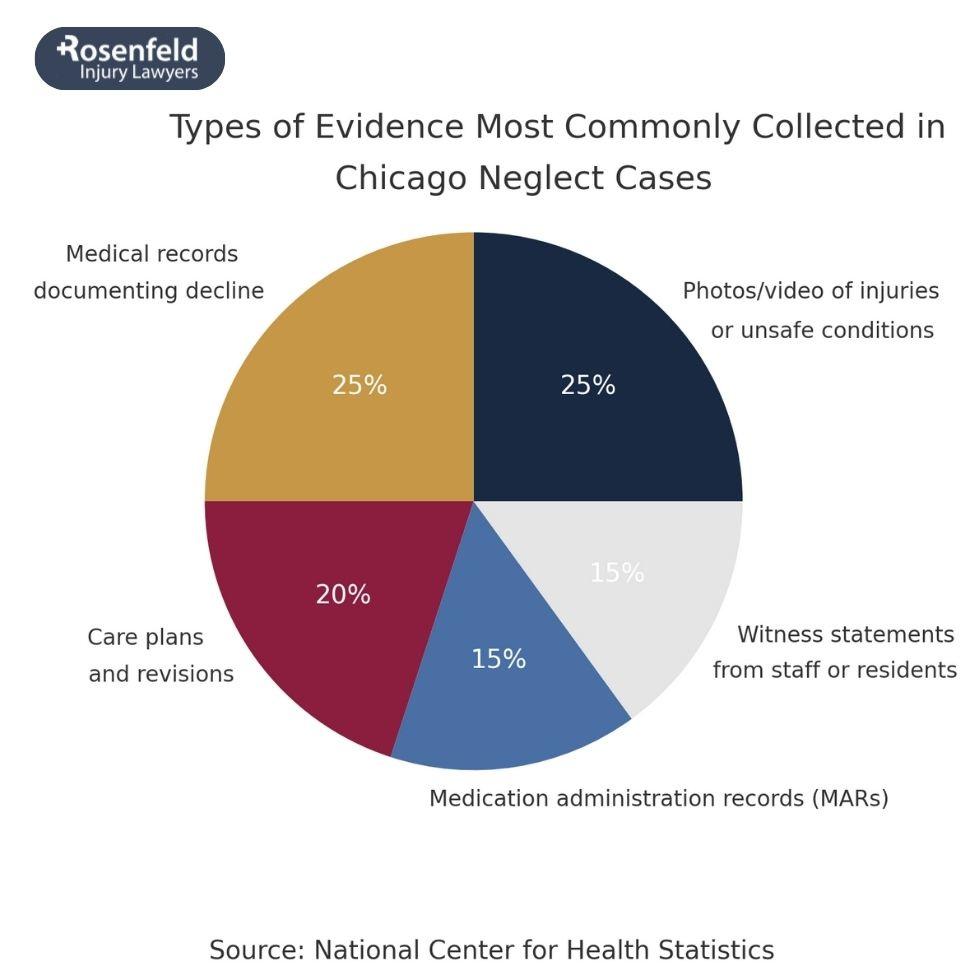
Medical records are an essential aspect of winning a personal injury case, as they provide impartial proof that the nursing home failed to offer proper medical care. These factual documents prove the extent of injuries, corroborate witness statements, and can point to standards violations, like using physical restraints that were not medically necessary (42 CFR 483.12).
When corroborated with other evidence, like state inspection reports and expert testimony, they can also reveal systemic issues that may point to medical malpractice.
As per appellate court rulings like MacKenna v. Pantano, only medical records that are directly relevant to the case should be included in order to respect patient privacy.
Witnesses provide invaluable evidence in nursing facility abuse cases, as they can support medical records of neglect and offer factual narratives. However, collecting these statements requires care and planning. Follow these steps to ensure you can gain quality information.
Contacting Adult Protective Services or the Illinois Department of Public Health is essential. Reporting nursing home abuse not only provides crucial evidence to prove nursing home negligence claims, but it can also offer a framework for legal intervention by state agencies.
A lawyer will use this information to seek justice for the harm caused by neglect. Evidence can be used to calculate damages, like physical pain and suffering or emotional distress, and demonstrate deviations from standards of proper care.
In some cases, the personal injury attorney will compare the evidence to current legal standards of care, such as the use of antipsychotics for elderly patients or ensuring all staff are competent (42 CFR 1395i-3).
Abuse allegations can have severe consequences for facilities and their staff, including revocation of Medicare status (42 CFR 424.535). In Illinois, neglect in a skilled nursing facility can even lead to felony convictions (720 ILCS 5/12-4.4a).
Not only do administrators want to prevent families from seeking compensation, but they also want to prevent these serious consequences. As such, they may attempt to cover up signs of neglect or abuse. These are some warning signs that the facility is trying to hide negligence.
Our Super Lawyers®-rated firm works on a contingency fee basis, meaning you pay nothing unless our nursing home abuse attorneys help you win. Contact us at (888) 424-5757 or use our online contact form to schedule a free case review with our compassionate attorneys.