
Chicago Personal Injury Lawyer
Award-Winning Chicago Personal Injury Lawyer - Securing Justice
for Illinois Injury Victims - Over $450 Million Recovered



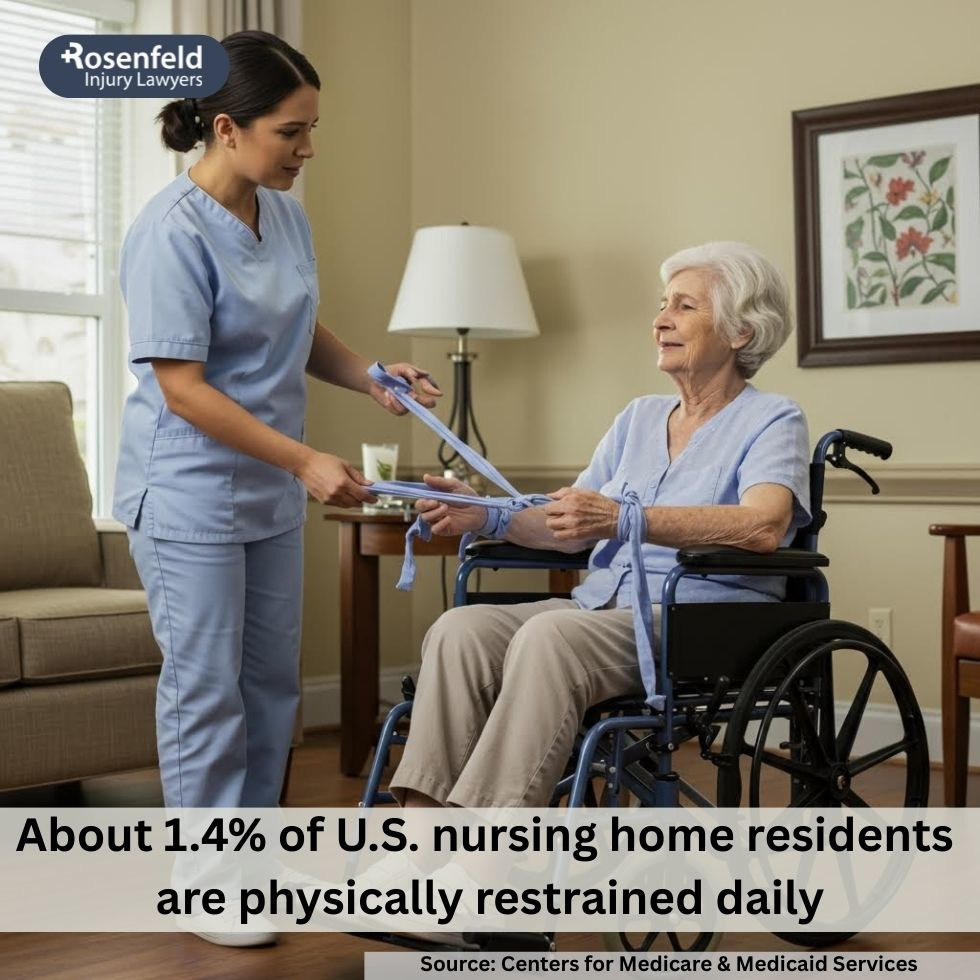
The use of restraints against nursing home residents is a tragically common form of abuse, making it crucial to understand what is considered a restraint in a nursing home. In Illinois, restraints are defined as anything that restricts a person’s freedom of movement, whether that is a medication or equipment attached to their body (210 ILCS 45/2-106).
If your family member has been subject to unnecessary restraints, help is available. Our Chicago nursing home abuse attorney team stands with you and your loved one, ensuring that abusive facilities are held accountable and that your elderly relative receives the support they need. Contact us today for a free consultation about chemical or physical restraints in nursing homes.
According to Liberty University, a physical restraint is anything that restricts movement or prevents a person from moving freely into a position of their choice.
In some cases, physical restraints are a medical necessity, such as if the patient’s behavior poses a risk to themselves or others. However, there have been a disturbing number of cases where a patient is physically restrained for staff convenience.
Common forms of restraint used in nursing home abuse include:
There are also environmental restraints, such as placing a bed so that the patient cannot rise.
Chemical restraints are medications that are given to reduce a patient’s ability to move or act, often used to prevent serious injuries to themselves or others. While many are used for certain medical conditions, they become restraints when administered specifically to reduce aggression or violent outbursts rather than as part of a regular treatment plan.
Common forms of chemical restraints include benzodiazepines and antipsychotics. However, these medications can cause serious symptoms, including delirium and loss of function. Antipsychotics are especially dangerous for the elderly, with a higher risk of mortality.
Under state laws, nursing home staff members can never physically or chemically restrain a patient solely for convenience or discipline. Any restraints used for optimal support of one’s body must be documented in their care plan and used only with informed consent.
A physician must order restraints, and the least restrictive restraint should always be employed to protect the resident’s dignity (210 ILCS 45/2-106).
Certain interventions are not considered restraints if they are used to treat a medical symptom (210 ILCS 45/2-106). For example, a patient with uncontrollable muscle spasms may wear a lap belt in their wheelchair to prevent falls. While it does limit the resident’s autonomy, it is done for their benefit and is not considered a restraint.
Restraining a resident, even when done for their safety, can lead to injuries and difficulty performing activities of daily living. Common physical injuries include:
Being restrained is traumatizing to patients, especially when done for convenience or discipline. Common symptoms include depression, shame, fear, and loss of dignity. There are cognitive effects associated with overmedication, including loss of interest in daily activities, lack of self-care, and worsening cognitive decline.
Certain chemical restraints can also increase the risk of early death. Antipsychotics like Risperdal have a Black Box Warning from the Food and Drug Administration because they are correlated with early mortality in the elderly.
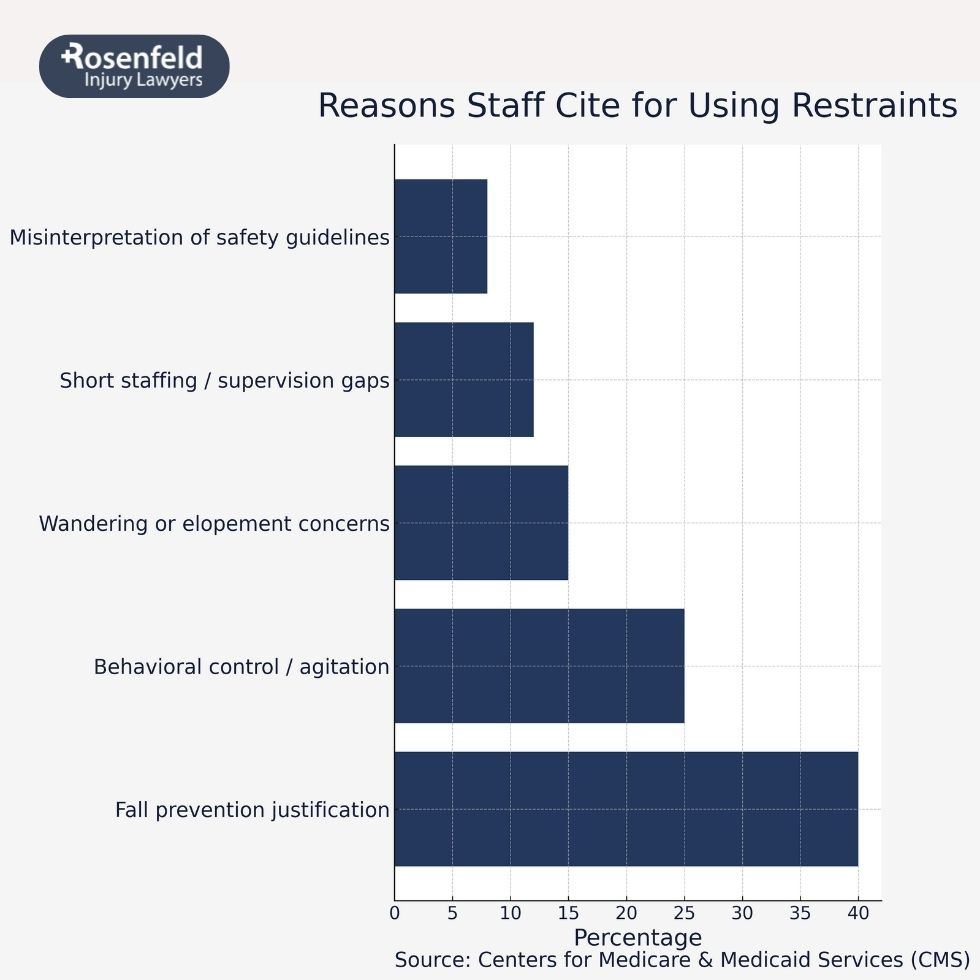
Tragically, research has demonstrated that understaffing has exacerbated the use of unnecessary chemical restraints, leading to grievous harm. Sedated patients are easier to control, leaving staff members time to manage other tasks, but they are also silently suffering and unable to help themselves.
Yes, using any chemical or physical restraint without medical necessity is considered a form of abuse. Using rails, straps, medications, and other methods of restraint to control an individual’s body is considered illegal under both state and federal law.
The Federal Nursing Home Reform Act of 1987 established the Nursing Home Resident’s Bill of Rights, including the right to live with dignity and freedom of movement (H.R.3545).
Specifically, the law states that every resident has the right to a life of respect, and that staff must refrain from restraining patients for convenience or discipline (42 CFR 483.12). Nursing homes must also train their staff on the appropriate use of these measures and document any usage.
If restraints must be used, staff must use the minimum force possible and for the shortest amount of time. The use of these must be documented and is subject to ongoing evaluation to determine whether it is still necessary (42 CFR 483.12).
The Illinois Nursing Home Care Act follows these federal guidelines. Restraints can only be used when absolutely necessary for the safety of everyone involved and must be overseen by a physician (210 ILCS 45/2-106).
Failure to adhere to these guidelines can lead to legal action against the facility or its staff members, as in the US Supreme Court case Health and Hospital Corporation of Marion County v. Talevski. The facility may also be subject to fines or revocation of its Medicare status.
Quick action is essential to protecting your loved one and getting justice for this abuse. The statute of limitations in Illinois is only two years (735 ILCS 5/13-202), so you must begin the process as soon as possible.
We can secure compensation that covers your family’s needs during this stressful time. Potential financial compensation includes:
In wrongful death cases, we can also secure funeral and burial expenses, grief, and loss of companionship.
Dealing with nursing home abuse can be stressful, traumatic, and overwhelming. Our Chicago personal injury attorney team is here to support you and your family by representing you in negotiations and at trial. Over the last 25 years, we have secured over $450 million in successful verdicts and settlements for families like yours, ensuring that negligent organizations are held responsible for abuse.
We are members of the American Association for Justice and the Illinois Trial Lawyers Association, known for our passionate advocacy and personalized approach to lawsuits. With our team by your side, you can focus on healing while we handle the legal components of your case.
Our firm works on a contingency fee basis: no fees unless we win. Schedule your free consultation with our caring attorneys by calling (888) 424-5757 or using our online contact form.