
Chicago Personal Injury Lawyer
Award-Winning Chicago Personal Injury Lawyer - Securing Justice
for Illinois Injury Victims - Over $450 Million Recovered



Accidents involving self-insured trucking companies are different because the trucking carrier is running the entire claims process through its own adjusters, its own investigators, and its own defense strategy. In a Chicago truck accident, that structure shapes what gets collected, what gets “lost,” and how quickly the story hardens against you.
When you are dealing with self-insured carriers, you are not stepping into a standard insurance claim on equal footing. You are stepping into a system designed to protect the company, manage payouts, and limit what gets shared. That is why we treat self-insured trucking as an evidence race and a leverage problem, not a paperwork task.
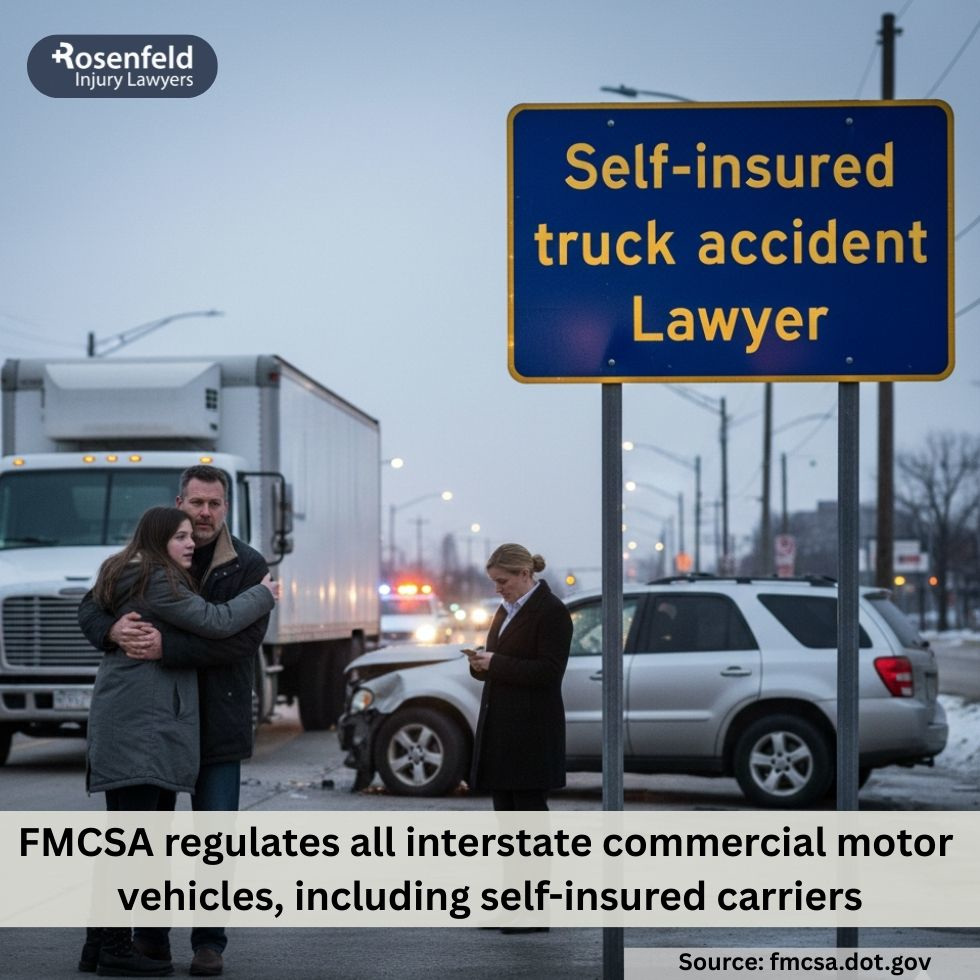
In many truck accidents, the insurer is a separate entity with its own procedures. With self-insurance, the separation disappears. The company controls early contact, directs the investigation, and often tries to steer accident victims into quick settlement conversations before the record is complete.
Common patterns in such claims include:
A truck accident claim can still be won, but the strategy has to account for the fact that the company is protecting itself and shaping the file from the start.
When the other side is self-insured, proof is the pressure point. We move quickly to secure objective records before the company’s internal handling creates gaps.
Key items we demand and preserve include:
This is where a truck accident lawyer adds real value. The goal is to keep the company from controlling the only version of the facts.
With insured trucking, you usually deal with an external adjuster and a defined policy structure. With self-insured truckers, you often face internal claims teams that treat payouts like an operating expense. That changes negotiation. It also changes discovery.
This setup may involve layers of “coverage” that are not obvious from the first phone call, including third-party administrators, excess carriers, or captive arrangements.
Your own claims matter too. In some car accidents, your auto coverage becomes a backstop for immediate needs while the liability case develops. But in a Chicago truck crash, relying on your own claims without a plan can shift costs to you while the company delays.
Self-insured does not mean the company can ignore responsibility. It means the company has more control over what gets documented first. That is why our trucking accident attorneys build the case around sources the company cannot rewrite and push for early preservation and formal production.
In self-insured claims, the strongest cases usually show:
If a loved one was seriously hurt or if the accident involves a fatality, the stakes are higher, and the company often becomes more aggressive about minimizing exposure. That is exactly when you need a structured approach.
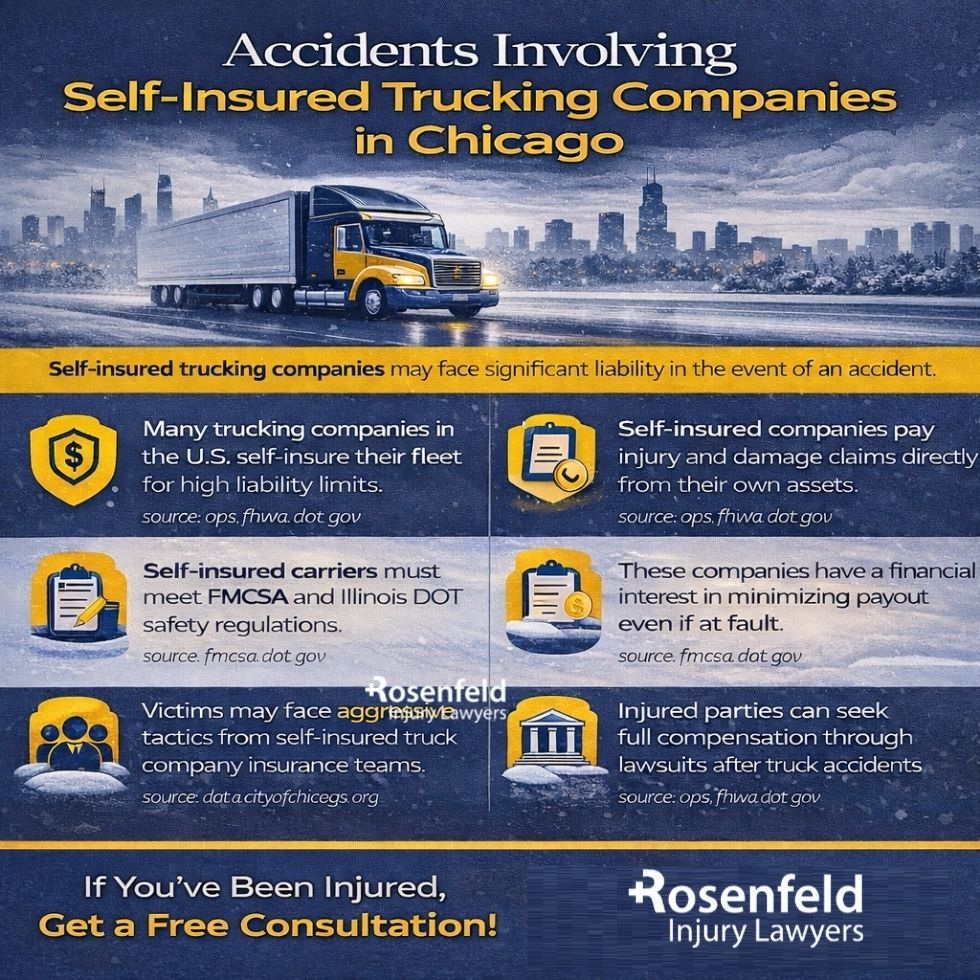
The leverage point is simple. Self-insured companies want control. We take it away by locking down records early and forcing accountability through formal demands, litigation when needed, and a documented narrative that survives scrutiny.
A truck accident lawyer should not treat such companies like a normal claim partner. They are the opposing party, and they are the claims administrator at the same time. That reality changes how we build the case, how we communicate, and how we protect accident victims from early “friendly” pressure.
If you were hurt in a truck accident, our personal injury lawyers can review the facts, explain how self-insured companies handle claims, and map out the next steps for your claim.
All content undergoes thorough legal review by experienced attorneys, including Jonathan Rosenfeld. With 25 years of experience in personal injury law and over 100 years of combined legal expertise within our team, we ensure that every article is legally accurate, compliant, and reflects current legal standards.