

Chicago Personal Injury Lawyer
Award-Winning Chicago Personal Injury Lawyer - Securing Justice
for Illinois Injury Victims - Over $450 Million Recovered



Box truck accidents in Chicago are usually not about interstate driving or long-haul tractor-trailers. They happen in tight delivery windows, narrow loading zones, curbside stops, and block-by-block rerouting that forces sudden turns and late merges.
A box truck can be a large vehicle with a short wheelbase, a tall center of mass, and a cargo area that changes weight distribution all day. That mix makes certain crashes more predictable and more provable.
When a crash involving a box truck happens near a loading dock, a double-parked delivery lane, or a stop-and-go corridor, we treat it like an evidence problem first. The goal is to capture the delivery route, the job expectations, the cargo condition, and the company rules that shaped the driver’s decisions.
A Chicago truck accident lawyer who knows how these deliveries run can turn that routine-looking wreck into a clear liability story.
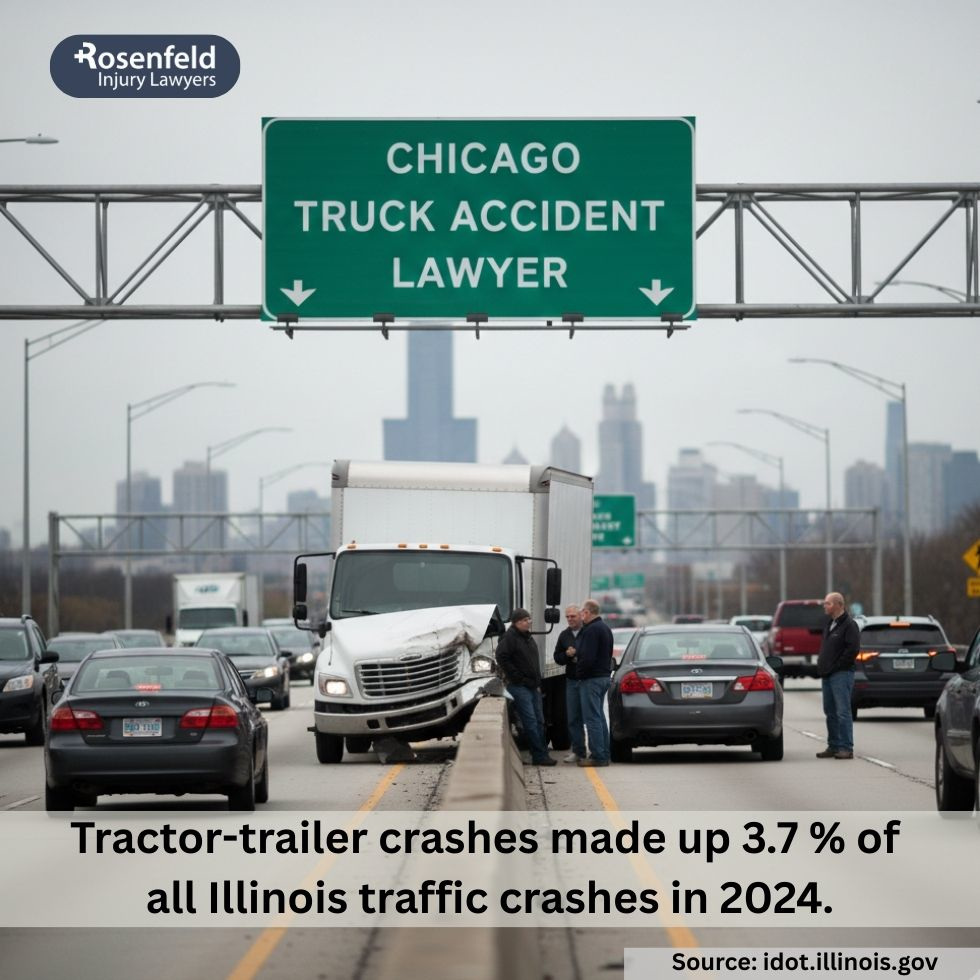
Most box truck crashes in Chicago show up where deliveries collide with traffic control and limited space. We see repeat patterns around commercial corridors where delivery vehicles crowd bike lanes, bus zones, and curb cuts. It is also common on streets feeding industrial pockets where box trucks mix with passenger vehicles, larger trucks, and semi-trailers moving to and from warehouses.
A crash with a box truck often starts with a box truck trying to deliver packages while also staying “on schedule,” which increases risky lane decisions. When a truck cuts across lanes late, swings wide, or stops abruptly, the other vehicles behind it have no time to react.
A box truck is not just a truck with a smaller trailer. The cargo box changes how the vehicle behaves in traffic, especially when weight shifts.
Common box truck mechanics that cause Chicago collisions include:
These details matter in establishing liability because they show what the trucking company should have trained for, what inspections should have caught, and what a driver should have done safely when operating a box truck under city conditions.
One reason box truck accidents can escalate quickly is that the person driving is not always a career commercial driver. Some box trucks require a commercial driver’s license, but many do not, depending on weight and configuration. That creates a predictable gap in experience. A driver who has never handled a fully loaded truck can misjudge stopping distance, cut too tight, or overcorrect during a merge.
Driver fatigue also shows up in city delivery work. Fatigue is not only about long-haul routes. It is about constant braking, constant scanning, constant parking decisions, and the mental load of app-based routing. When driver fatigue stacks with distracted driving, crashes become more likely.
In many box truck accident cases, the cargo is as important as the driver. Cargo weight, stacking, and securement can explain why the truck behaved the way it did.
Cargo issues we investigate include:
Because these facts often trace back to company procedures, they can identify potentially liable parties beyond the driver, including the company that planned the load.
Certain crashes are disproportionately common with box trucks in dense Chicago traffic:
A truck accident investigation should treat each of these as a systems issue involving the driver, the route plan, and the employer’s delivery rules.
To prove a box truck case, we secure the details that delivery companies try to minimize. Police reports can help, but we do not rely on an accident report alone. We look for the operational data that shows what the driver was doing and why.
Evidence we work to secure includes:
This is also where pursuing compensation becomes practical. If we can show the company’s role in the risk, it becomes easier to establish whois liable.
Establishing fault in a box truck crash usually involves more than a single person’s mistake. The company that owns the truck, assigns routes, sets delivery expectations, and controls training can be responsible. In some cases, the driver is an employee. In others, the driver is tied to a contractor, which can complicate the legal options but does not erase accountability.
Potentially liable parties can include:
When negligence is tied to company choices, punitive damages can become relevant in the right fact pattern, especially when safety issues were known and ignored.
Because a box truck is heavy and tall relative to a car, injuries can be severe even at city speeds. We often see serious injuries like:
Medical expenses, medical bills, lost wages, and ongoing care often drive claim value. Documenting those costs is key to seeking compensation that reflects the real harm.
A box truck accident claim often depends on proving three points:
Medical records, witness testimony, and vehicle data tend to carry the most weight. The sooner the investigation starts, the easier it is to preserve what matters.
If you are injured, prioritize medical attention and then protect the evidence trail.
Steps that help preserve your legal rights include:
This is not about being dramatic. It is about securing facts before they disappear.
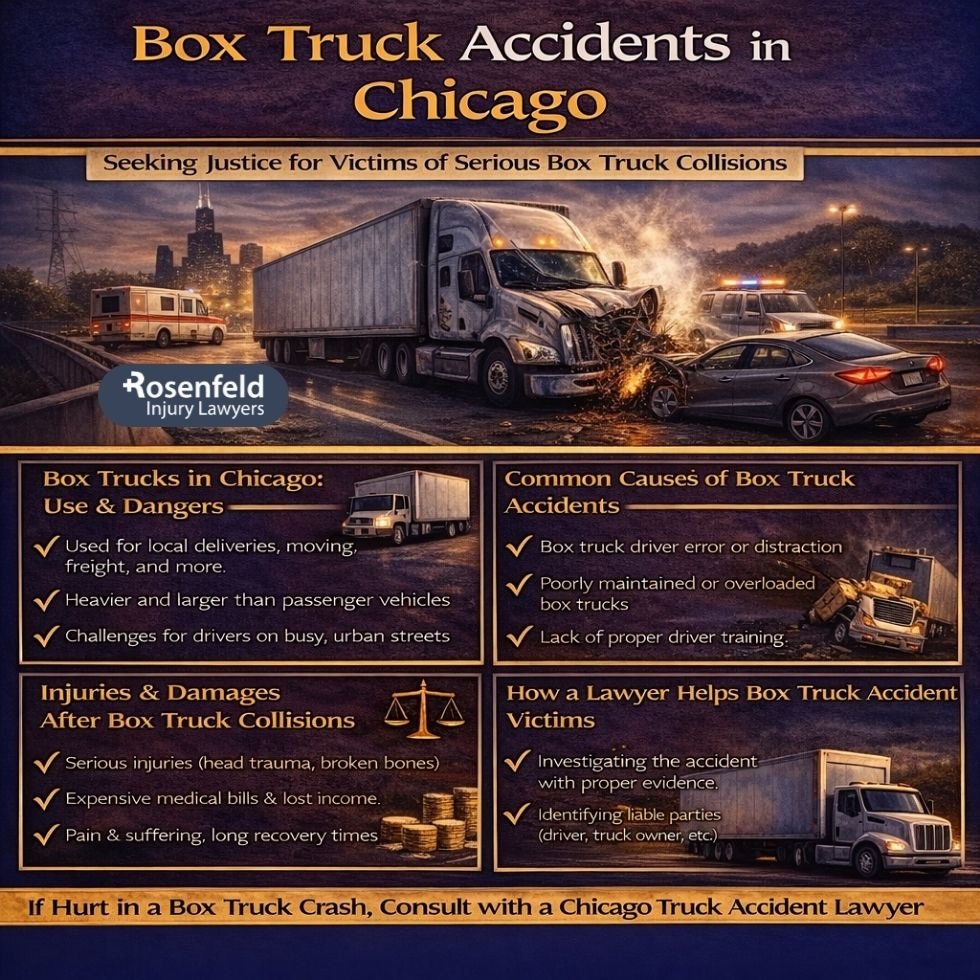
Compensation in these cases can include medical expenses, lost wages, and non-economic damages tied to pain and limitations. Property damage is often part of the claim as well, but injuries usually control the case value. Fair compensation depends on proof of how the crash happened, what injuries occurred, and who is liable.
The settlement data for these cases points to a median of $490,185 and an average of $3,334,481, with results ranging from $39,650 up to $15,443,094.
If you want fair settlements, the work is front-loaded. Our experienced attorneys secure evidence early and build a case that the defense cannot shrug off as a minor delivery mishap.
If you were hurt in an accident involving a box truck in Chicago, we can explain your legal options and what evidence we need to secure. A free consultation with a Chicago personal injury lawyer is the fastest way to get clarity on whether the company, the driver, or other parties should be held liable and what compensation may be available.
All content undergoes thorough legal review by experienced attorneys, including Jonathan Rosenfeld. With 25 years of experience in personal injury law and over 100 years of combined legal expertise within our team, we ensure that every article is legally accurate, compliant, and reflects current legal standards.