

Chicago Personal Injury Lawyer
Award-Winning Chicago Personal Injury Lawyer - Securing Justice
for Illinois Injury Victims - Over $450 Million Recovered



A CRST International truck crash in Chicago can leave you dealing with severe injuries while the carrier’s insurer starts working the case from day one.
In many tractor-trailer collisions, the key proof is controlled by the trucking side, not the injured person, including driver logs, dispatch communications, onboard data, maintenance history, and the load and route timeline that explains how the crash developed.
We focus on securing the evidence trail early and building the claim around what can be documented, not what gets asserted in a phone call. If you need a Chicago CRST International truck accident lawyer who knows how national carriers defend trucking cases, Rosenfeld Injury Lawyers is ready to help.
CRST International is associated with large-scale trucking operations and logistics services, including multi-driver and long-haul freight movements.
That operating footprint means its equipment can move through Chicago as part of scheduled corridor travel, time-sensitive shipper demands, and high-mileage runs where fatigue and trip planning show up clearly in log and dispatch records after a crash.
For an injury claim, the details that matter are the ones tied to the specific unit: the correct CRST entity involved, the tractor and trailer identifiers, who controlled the trip and load, and the inspection and service history for the equipment that was on the road at the time of the collision.
| CRST EXPEDITED INC – Safety Snapshot | |
|---|---|
| USDOT Number | 53773 |
| Mailing Address | 3930 16th Ave SW, Cedar Rapids, IA 52404 |
| Telephone | (319) 396-4400 |
| Website | https://crst.com/ |
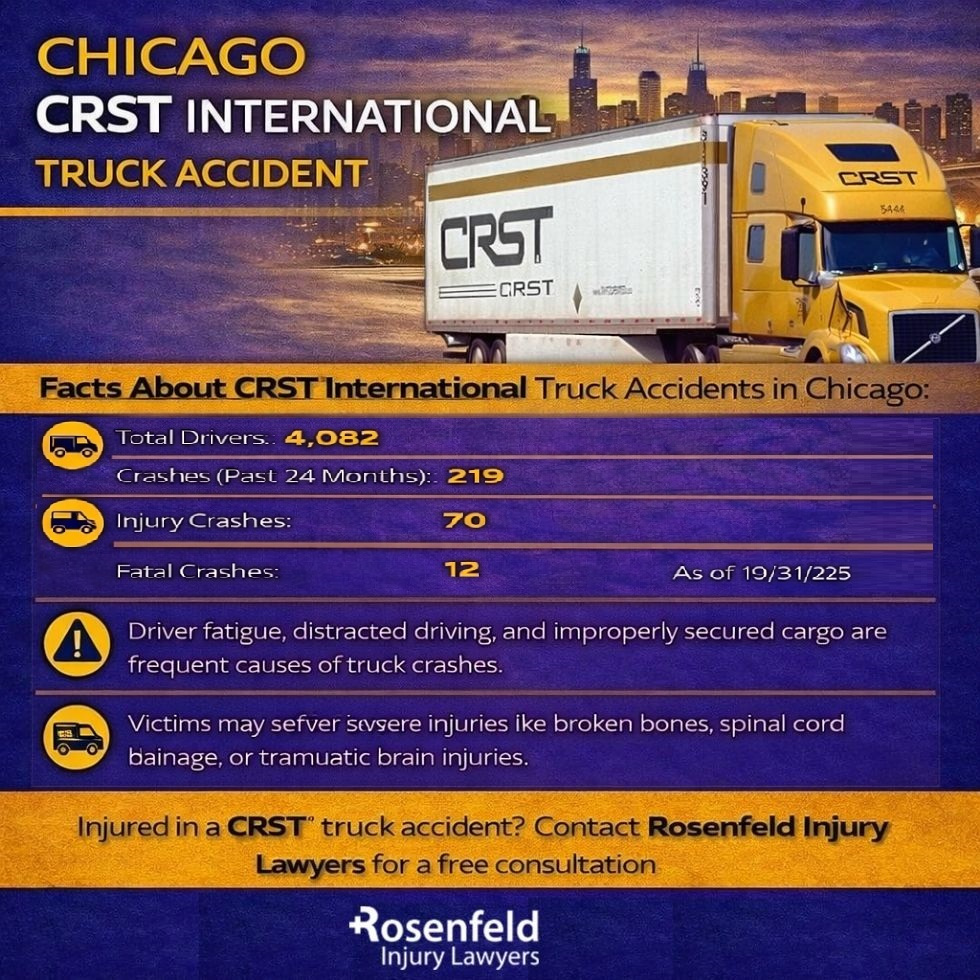
| Total Power Units | 4,362 |
| Total Drivers | 4,082 |
| Crashes (Past 24 Months) | 219 |
| Injury Crashes | 70 |
| Fatal Crashes | 12 |
| Date | 12/31/25 |
A head-on truck collision involving a CRST tractor-trailer left two brothers with catastrophic injuries, including traumatic brain injuries. The trial did not turn on whether the truck caused the crash. It turned on the scope of harm and what it would take to live with those injuries long-term.
The jury returned a $52.84 million verdict after testimony from numerous medical and truck accident reconstruction experts. The defense’s highest pretrial offer was $11.5 million, a gap that highlights how sharply trucking case value can change when damages are fully tried.
A newly hired driver had been on the job for about 14 days and was still working as a student driver. During the trip, the lead driver was asleep in the sleeper berth when the student driver made a left turn that wasn’t wide enough and hit another truck that was stopped at a red light.
The injured man sued, and a federal jury found that CRST Expedited carried most of the blame. The jury assigned 88% fault to CRST Expedited and 12% to the student driver, based on evidence that CRST’s own records showed the student driver had known trouble making left turns, but CRST did not communicate that issue to the lead driver supervising the run.
The jury awarded $1,260,000 total, broken down as $150,000 for medical expenses, $270,000 for lost wages and pension, and $840,000 in general damages (pain and suffering, mental anguish, and loss of enjoyment of life). The matter was later resolved for $1.45 million before appeal.
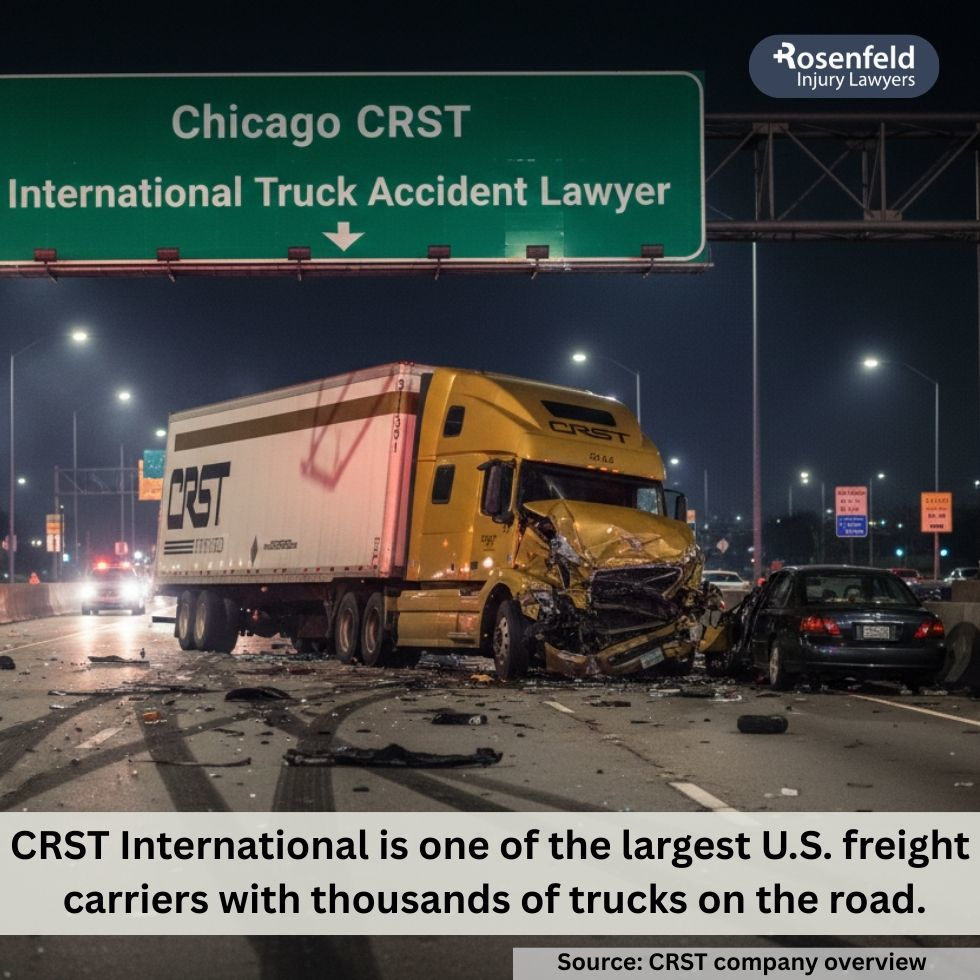
CRST team operations create a basic question that has to be answered with data, not assumptions: which driver had control of the tractor at the instant the crash began. Sleeper-berth swaps and mid-run handoffs can muddy that answer unless the underlying records are preserved and compared.
We pin down the driving sequence using ELD exports, co-driver duty status, dispatch touchpoints, and any onboard indicators of delayed reactions or unstable speed changes.
When a trainee is involved, the case often hinges on whether the trip was built around the driver’s actual ability. Tight turns, complex interchanges, and rushed schedules are not training environments, and the paper trail usually shows whether the carrier treated them that way anyway.
We pull trainer assignments, supervision notes, route guidance, and internal performance feedback, then test whether dispatch expectations matched what the carrier already knew about the student driver’s limitations.
I-290 forces rapid lane positioning and unforgiving merge timing. A tractor-trailer that commits late can set up sideswipes and forced-merge impacts in a matter of seconds.
I-88 is a different kind of hazard. Speeds run higher, braking distances stretch, and sudden compression near interchanges can turn a minor miscalculation into a violent rear-end sequence.
Corwith drayage activity funnels trucks through repeat industrial approaches where queuing, staging, and tight facility access are part of the routine. Those conditions raise the risk of squeeze-zone contact, abrupt braking collisions, and blind-spot incidents during low-speed maneuvering.
In CRST-related truck accidents tied to this environment, we map the approach route, identify where the truck was stacked or staged, and match that timeline to dispatch communications and trip changes.
Illinois personal injury actions following truck accidents are generally governed by a two-year filing deadline under 735 ILCS 5/13-202.
If a CRST truck caused your injuries in Chicago, contact Rosenfeld Injury Lawyers to speak with a personal injury lawyer and begin preserving the driver and carrier records that can define fault, damages, and long-term recovery.
All content undergoes thorough legal review by experienced attorneys, including Jonathan Rosenfeld. With 25 years of experience in personal injury law and over 100 years of combined legal expertise within our team, we ensure that every article is legally accurate, compliant, and reflects current legal standards.