

Chicago Personal Injury Lawyer
Award-Winning Chicago Personal Injury Lawyer - Securing Justice
for Illinois Injury Victims - Over $450 Million Recovered



A trucking company does not get to claim a defect was a surprise when the driver already reported it. In Chicago truck accident lawsuits, Driver Vehicle Inspection Reports, called DVIRs, can be the paper trail that proves prior knowledge.
When a defect is written down, and the truck is dispatched anyway, the case stops being about ordinary negligence and starts looking like a willing decision to put the public at risk.
HIGHLIGHTS:
DVIRs are required inspection reports created by drivers to document vehicle condition. They are not optional checklists. They are compliance records that identify defects, document whether the defect impacts safety, and create a written record that the carrier must address.
After a serious crash, a DVIR can answer the question that matters most in a liability case. Did the carrier know the truck had a safety issue and send it out anyway?
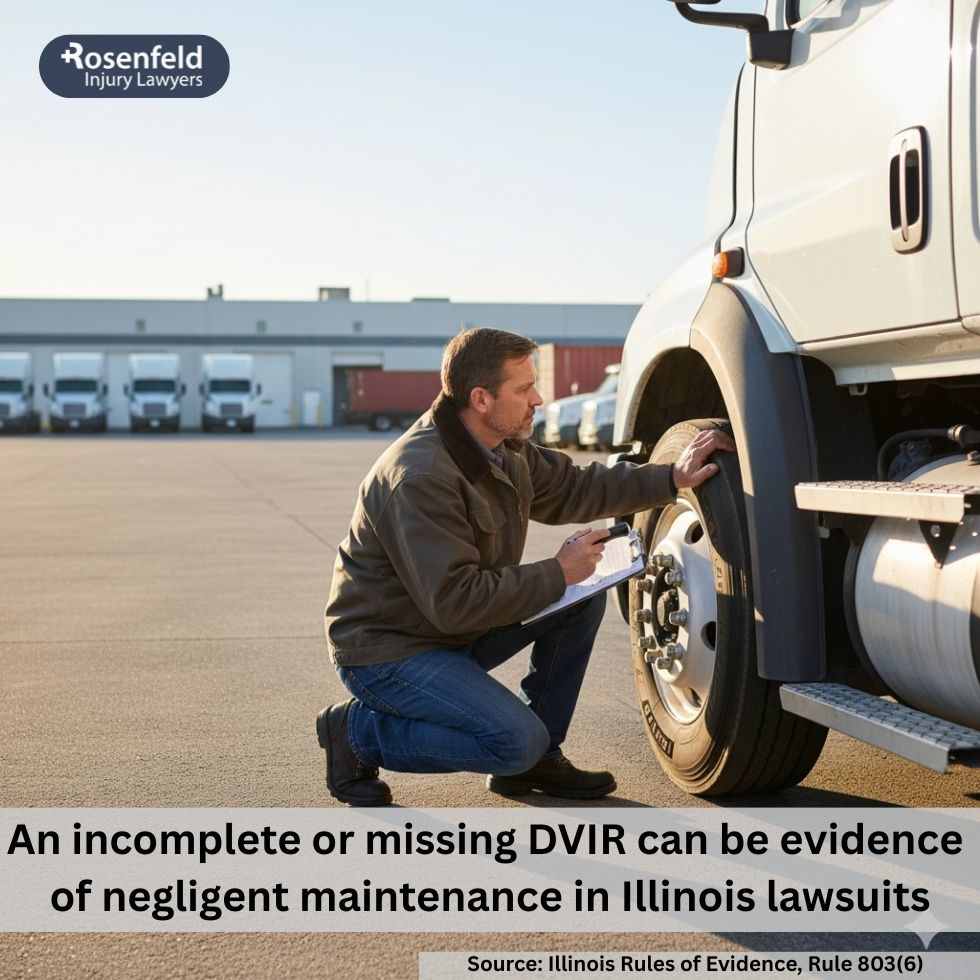
A defect can happen. Prior knowledge changes everything.
If a driver writes “Air Leak,” “Brake Out of Adjustment,” “Tire Worn,” or similar issues on a DVIR and the carrier dispatches the truck without fixing it, the company has created a dated, traceable admission that it knowingly took a risk.
That is exactly the kind of evidence that supports a gross negligence argument in the right case, especially when the defect is directly tied to how the crash occurred.
Under 49 CFR § 396.11, drivers must complete inspection reporting that identifies defects or deficiencies. When a defect is noted, the carrier is expected to address it and document the response. The most revealing part of the DVIR is often not the defect itself. It is what happened next.
A carrier that fails to repair a noted defect before dispatch, or signs off without a legitimate repair, creates an avoidable violation that can become central to liability.
DVIRs often include a “Certification of Repair” section intended to document that repairs were completed and the vehicle was safe to return to service. In litigation, that box becomes a stress point for the defense.
Common patterns we see include:
This is how a DVIR becomes more than a compliance form. It becomes a paper trail that the carrier willingly dispatched an unsafe truck.
Punitive damages are not about compensation. They are about deterrence and punishment for conduct that goes beyond carelessness. DVIRs can support that argument when they show the company had an explicit warning and chose to ignore it.
A carrier that had notice of a safety defect and dispatched the truck anyway can look like:
That shift can change settlement posture, discovery scope, and how a jury understands responsibility.
In Chicago traffic conditions, DVIRs frequently document defects that match the most common crash mechanisms, such as:
The key is the timeline. If the defect appears before the crash and the truck is dispatched anyway, the carrier’s knowledge becomes evidence.
Brake-related DVIR notes are rarely minor. When a driver reports brake performance issues, air pressure problems, out-of-adjustment concerns, or related warnings, that record can directly support a brake failure liability theory.
In Chicago freight corridors, many crashes involve intermodal operations and chassis equipment that changes hands. DVIRs often flag defects like worn tires, damaged rims, lighting failures, or structural issues that can be tied to chassis responsibility and maintenance gaps.
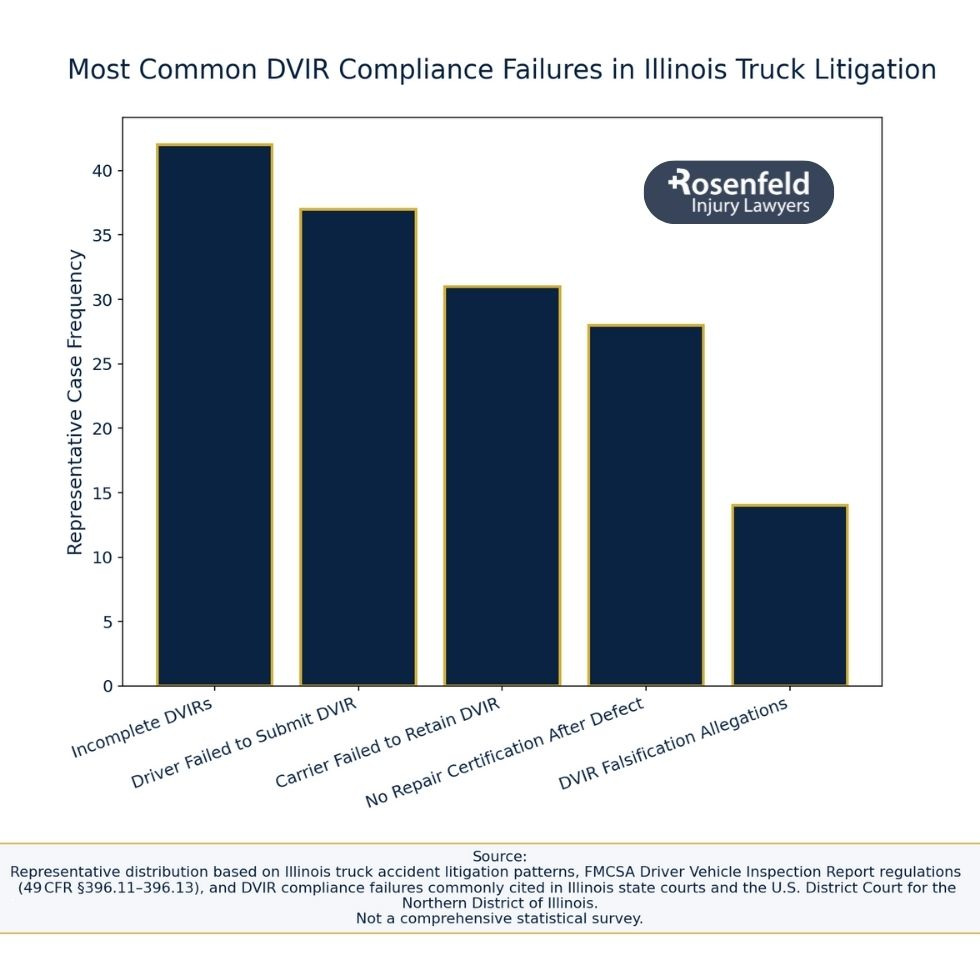
We do not treat DVIRs as paperwork. We treat them as admissions.
When we investigate a Chicago truck accident, we look for DVIR records that show what the driver reported, when it was reported, and whether the carrier documented a real repair before dispatch. We compare DVIRs to maintenance logs, repair invoices, dispatch records, and post-crash inspection findings to identify inconsistencies and patterns.
If a carrier had a written warning and rolled the truck anyway, we use that paper trail to show the decision was not an accident. It was a choice.
If you were injured in a crash involving a commercial truck, do not assume the carrier’s records will tell the whole story. DVIRs can reveal what the company knew before the collision and whether it ignored a reported defect. Contact us so our experienced personal injury attorneys can secure the inspection records, connect them to the crash mechanics, and hold the carrier accountable for putting a dangerous truck on Chicago roads.
All content undergoes thorough legal review by experienced attorneys, including Jonathan Rosenfeld. With 25 years of experience in personal injury law and over 100 years of combined legal expertise within our team, we ensure that every article is legally accurate, compliant, and reflects current legal standards.