
Chicago Personal Injury Lawyer
Award-Winning Chicago Personal Injury Lawyer - Securing Justice
for Illinois Injury Victims - Over $450 Million Recovered



Over 925 million tons of freight move through Chicago annually, much of it via commercial trucks. With so much intrastate and interstate commerce along Illinois highways, understanding federal and Illinois trucking laws and regulations is essential for both commercial truck drivers and everyday motorists.
Our skilled Chicago truck accident attorneys will also use these regulations to identify liability and hold negligent agencies accountable.
Both federal regulations and Illinois trucking laws strictly regulate commercial motor vehicles. While federal law sets minimum requirements for the trucking industry, state trucking regulations can impose stricter requirements on intrastate drivers and commercial truck drivers on interstate highways within their jurisdiction.
Illinois generally has much stronger state laws and regulations than the federal government.
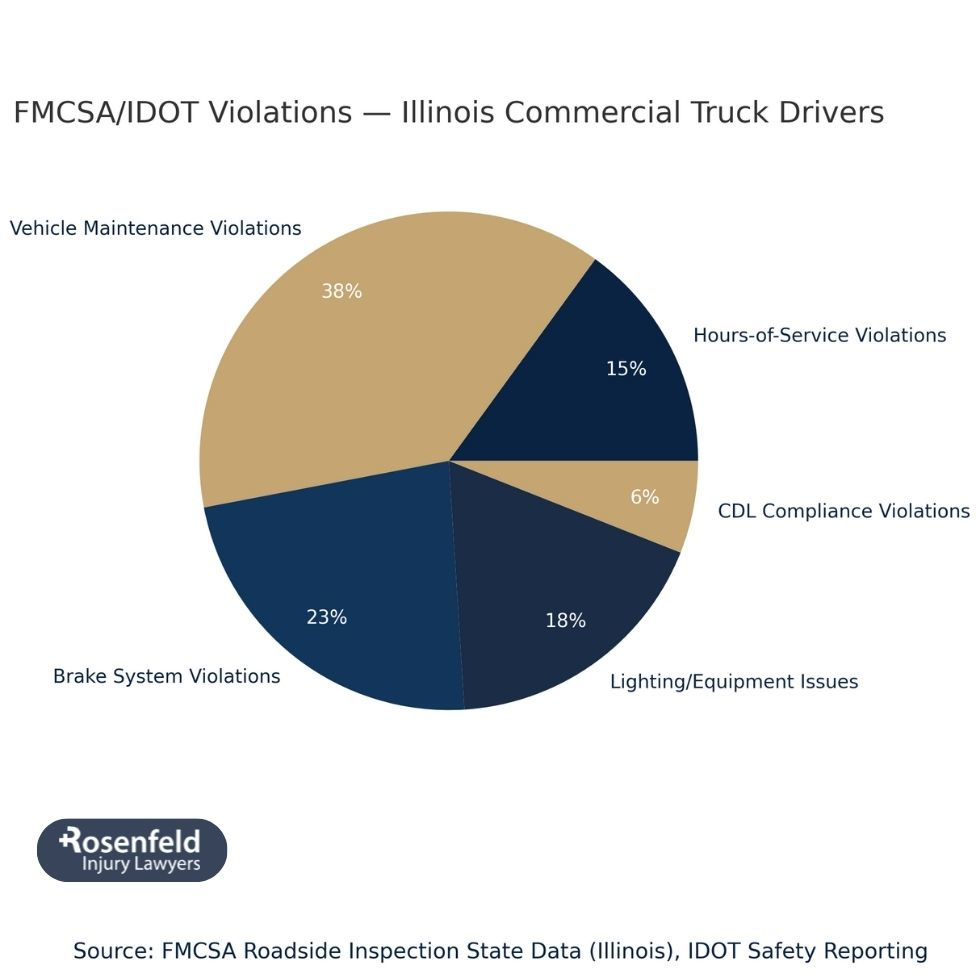
The Federal Motor Carrier Safety Administration (FMCSA) is the department tasked with enforcing federal regulations and working with state agencies like the Illinois Department of Transportation (IDOT).
FMCSA requires trucking companies to prioritize safety and prevent driver fatigue. These regulations cover things like rest periods, drug and alcohol testing, vehicle maintenance, and weight limits on highways. Together, these prevent accidents and ensure the safety of everyone on the road.
The FMCSA enforces daily and weekly limits on driving time for commercial drivers. Property-carrying drivers can drive a maximum of 11 hours after 10 hours off-duty, while drivers who transport passengers can only drive 10 hours after 8 hours off-duty. They also cannot drive more than 60 hours in a week (49 CFR Part 395).
Illinois trucking laws generally follow the FMCSA for hours of service, but do have some exceptions for certain circumstances, like utility truck drivers in times of service interruptions (625 ILCS 5/18b-106.2).
Electronic logging devices are used to track hours of service and can be used in truck accident cases where the commercial vehicle driver has gone beyond their mandated driving time.
Illinois has a maximum gross vehicle weight rating of 80,000 pounds for five axles. These weight regulations are based on the Federal Bridge Formula, which determines how much weight a bridge can carry before being damaged.
While most commercial trucks do not exceed weight limits on interstate bridges, some bridges have lower limits, and an overweight truck could be fined.
Illinois law strictly regulates the transport of hazardous materials. The driver must have a commercial driver’s license (CDL) with an endorsement for these materials (625 ILCS 5/6-507).
They also must display hazardous material placards, plan their routes to avoid non-HM highways, and park their trucks in safe areas to prevent injury to anyone. If an accident occurs involving these materials, there may be much harsher penalties than for non-hazardous freight or passenger car accidents (430 ILCS 30/11).
Illinois trucking laws enable drivers 18 years or older to operate commercial vehicles within state lines. However, truck drivers must be at least 21 to operate interstate commercial vehicles (625 ILCS 5/6-507). This is in line with federal law, which does not allow CDL permits to anyone under 21.
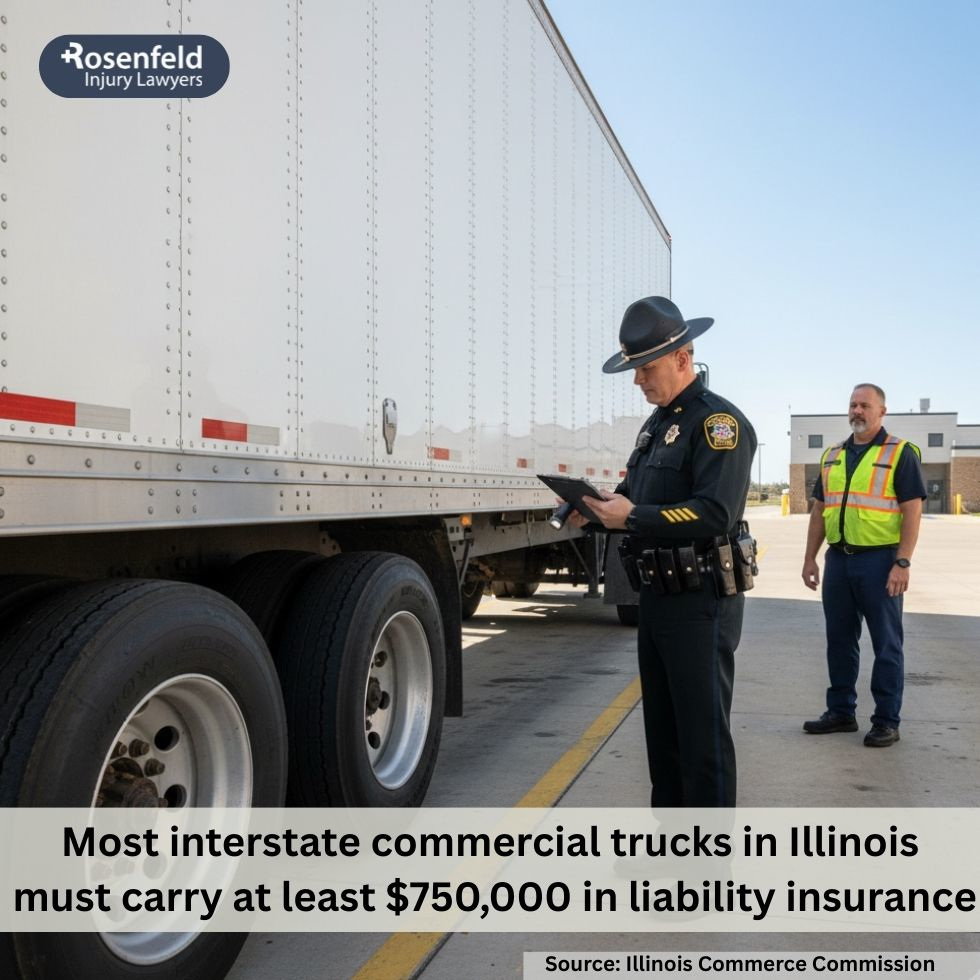
Understanding these laws and regulations is essential for securing maximum compensation. While all commercial truck drivers are required to carry liability insurance under federal and state regulations, the trucker’s insurance company will push to minimize its financial responsibility.
Multiple parties can be held liable after a truck crash, including the following:
Our Chicago personal injury law firm will use evidence like logging devices, surveillance footage, police reports, and witness statements to understand how the accident occurred and who may be liable. The Illinois Supreme Court has also ruled that post-accident photographs can be used to demonstrate the extent of damage and potential fault (Peach v. McGovern).
Trucking companies will aggressively deny responsibility, using laws like modified comparative negligence to claim you were primarily negligent (735 ILCS 5/2-1116). However, our attorneys are well-versed in all relevant trucking regulations and will ensure that these companies are held liable for any failure to comply with the law.
Our Million Dollar Advocates have secured over $450 million in personal injury verdicts and settlements during the past 25 years, helping over 5,000 clients get justice. We work on a contingency fee basis: no fees unless we win your claim.
Contact us at (888) 424-5757 or use our online contact form to schedule a free consultation and explore your legal options.