
Super Lawyers - Badge
Illinois State Bar Association - Badge
Justia 10 - Badge
Million Dollar Advocates Forum - Badge
Avvo Rating 10 / Jonathan Rosenfeld / Top Attorney - Badge
BBB / Accredited Business / A+ - Badge

Garbage Truck Accidents in Chicago

The “Stop-Start Danger” of Refuse Collection

Garbage truck accidents are not like highway tractor-trailer cases. A garbage truck is a stop-start, hydraulically powered work zone moving through residential blocks while people leave for work, walk kids to school, or pull out of alley garages. In Chicago, that means the crash risk is baked into the route: constant curbside stops, frequent backing, tight turns, and limited sightlines around parked cars.

When a garbage truck crash happens, the first question is rarely “who was speeding.” It is usually “what was the truck doing at the curb, and who was responsible for keeping that operation safe.”
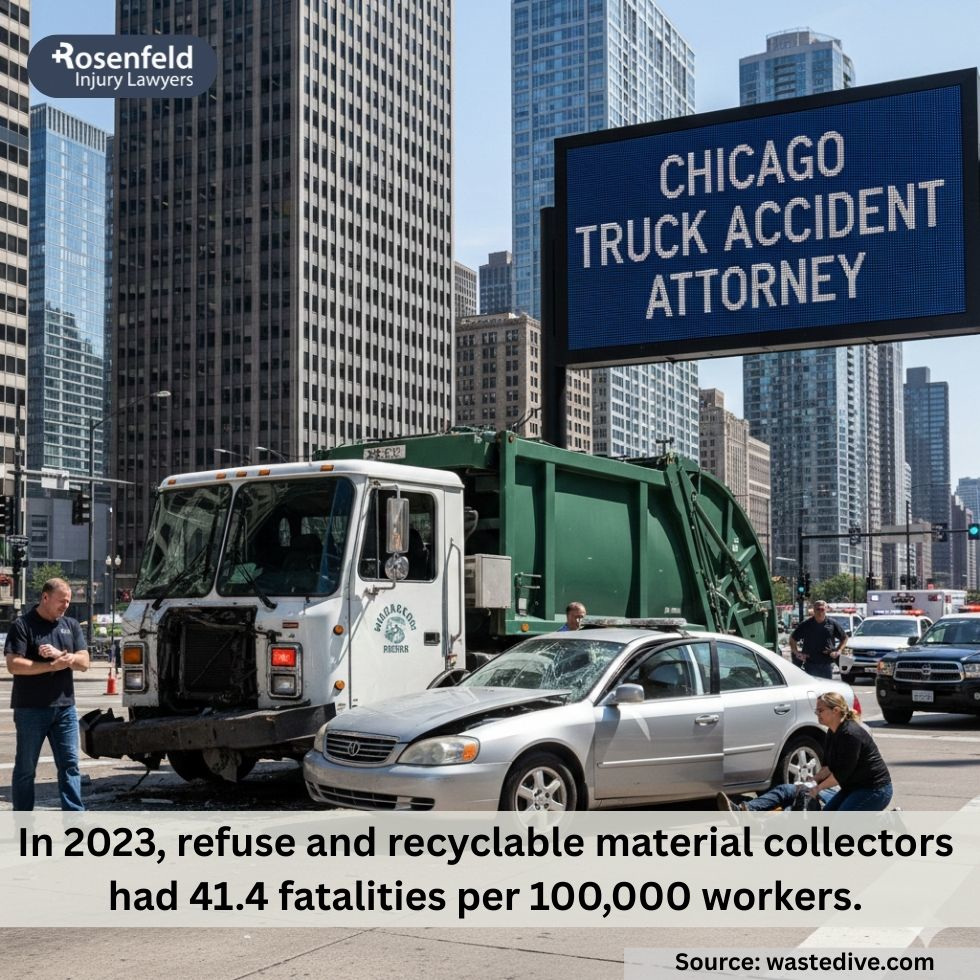
Chicago garbage truck accident lawyer

What Makes Garbage Truck Accidents Unique in Chicago

Garbage trucks operate differently from most commercial trucks. Those differences create predictable failure points that show up again and again in garbage truck accidents:

  • Reversing and alley access: Many routes require backing into alleys or positioning near garages. A driver can lose sight of a pedestrian or cyclist in seconds.
  • Right-side blind spots and wide turns: A garbage truck can swing into a lane or clip a car at an intersection when the driver cannot see the full envelope of the truck.
  • Curbside worker exposure: Crews work on foot near moving traffic, and a passing vehicle can be hit when the truck pulls out suddenly.
  • Hydraulic cycles and distraction: The truck is powered by ongoing mechanical operations that demand attention, which can pull focus from surrounding traffic.
  • Collection pressure: The fastest way to create negligence is a schedule that encourages risky backing, rushing a merge, or rolling stops.

These cases are about systems, not luck.

Where Garbage Truck Crashes Happen and Why That Matters

In Chicago, garbage truck accidents cluster on:

  • Residential streets with dense parking where the truck must pull in and out repeatedly
  • Alley networks where sightlines are short and people appear unexpectedly
  • School and park corridors during morning hours when a child or parent may be near the roadway
  • Commercial corridors where the truck is stopped and traffic stacks behind it

The location tells you what evidence exists and what safety expectations apply.

The Most Common Causes We Investigate in Garbage Truck Accident Cases

When we review garbage truck accidents, we focus on causes that are specific to refuse operations:

  • Backing without a spotter or without a safe plan
  • Pulling from a stopped position into traffic too quickly
  • Door-side blind spot strikes during turns
  • Failure to secure the work area around the truck
  • Poor route design that forces unsafe maneuvers
  • Driver fatigue from early starts and repetitive stops
  • Equipment issues with cameras, alarms, or braking response

A garbage truck can be legally on the road and still operated negligently.

Who Can Be Responsible in a Chicago Garbage Truck Accident

Liability in garbage truck accidents is often broader than “the driver made a mistake.” Depending on who owns the truck and who is running the route, we may pursue claims against:

  • The employer that trained and supervised the truck driver
  • The garbage truck company or private hauler contracted to operate in Chicago
  • A municipal contractor responsible for staffing, routing, or safety rules
  • A maintenance provider if brakes, cameras, or warning systems failed
  • Any driver who contributed by cutting around a stopped truck or making an illegal lane move near the collection zone

We build responsibility around what should have been done to protect the public during collection operations.

The Evidence That Exists in Garbage Truck Cases That Does Not Exist Elsewhere

Garbage truck accidents often come with unusually strong documentation if you move fast enough:

  • Route and time logs that show where the truck was and how long it was stopped
  • On-board camera footage, when installed, covering the rear and side zones
  • GPS and telematics that track stop frequency and driving behavior
  • Dispatch records that show whether the route was overloaded or rushed
  • Repair history and inspection records for safety equipment
  • Police reports and 911 records tied to the crash scene
  • Witness statements from residents, nearby workers, or other drivers

This is why early requests matter. If a company controls the data, delay can cost the case.

Injuries and Losses in Garbage Truck Accidents

Because the truck is heavy and the impacts often happen at close range, injuries can be devastating. We routinely see:

  • Crush injuries and internal trauma
  • Head injuries and orthopedic damage
  • Severe injuries requiring surgery and long recovery
  • Death in the worst cases, including situations where a person is killed near the curb line

These crashes do not just cause medical bills. They change a family’s life, especially when a loved one cannot return home or cannot return to work.

What the Average Settlement Data Can and Cannot Tell You

Garbage truck accident payouts average of $2,080,333 and a median of $2,025,000, with a value range from $16,000 to $4,200,000. Those numbers move based on the injuries, the clarity of negligence, and whether the case involves a fatal outcome or permanent disability.

The practical takeaway is this: when the evidence shows a preventable operational failure, garbage truck accident cases tend to be valued differently than generic vehicle crashes because the risk is known and the safety expectations are higher.
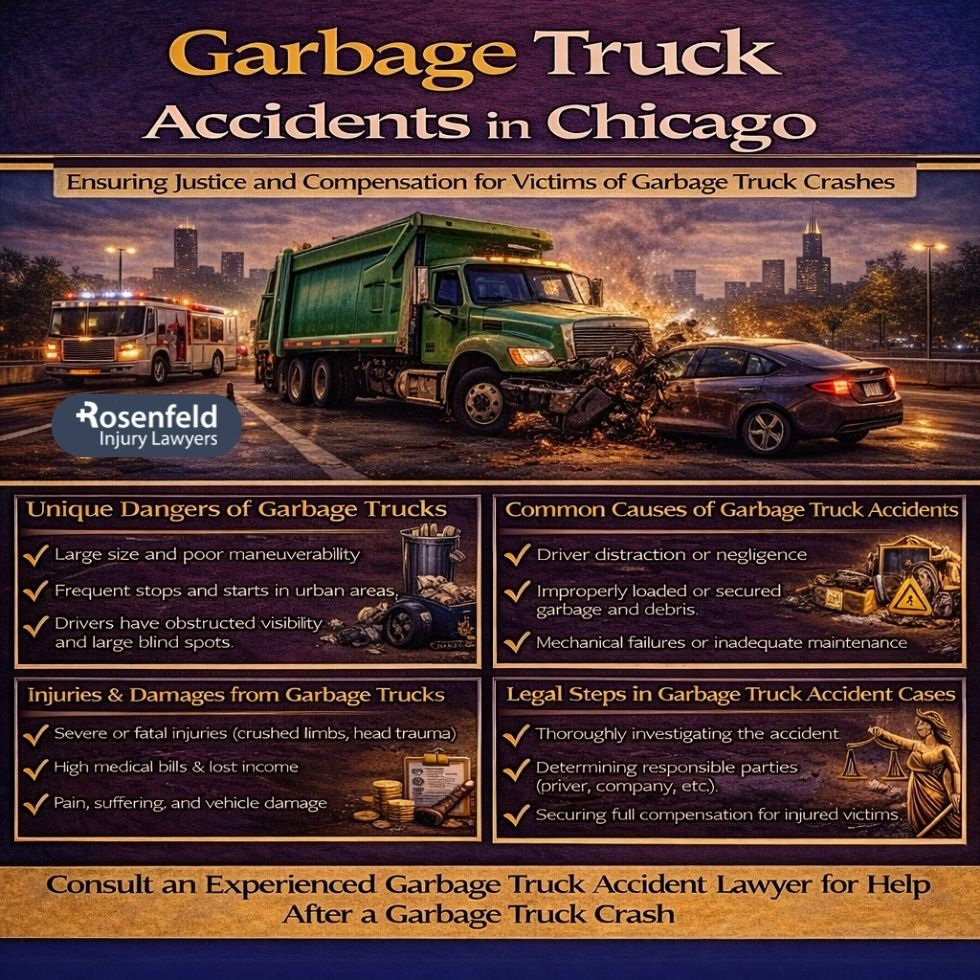
Claims involving garbage truck drivers in Chicago

What to Do After a Garbage Truck Crash in Chicago

If you were injured, protect your health and your case:

  • Get medical care and follow through on treatment
  • Ask for the police report number and confirm the responding district
  • Photograph the truck, the roadway, and any collection context, like parked positioning
  • Save any phone photos, texts, or notes about what you saw
  • Get contact information for witnesses if possible

Then call a Chicago truck accident attorney who understands these operations. We can send formal preservation requests immediately and start securing records before they disappear.

How We Help Chicago Families After a “Routine Route” Turns Devastating

At Rosenfeld Injury Lawyers, we handle serious truck cases where companies expect the public to accept a story instead of demanding the data. If you were hurt in a Chicago garbage truck accident, we will investigate the route, the driver, and the contractor structure behind the truck, then pursue the claim with the evidence that proves responsibility.

If your family lost a loved one, we will treat the case with urgency and care, and we will protect your right to pursue accountability. Call today to request a consultation with a Chicago personal injury attorney.

All content undergoes thorough legal review by experienced attorneys, including Jonathan Rosenfeld. With 25 years of experience in personal injury law and over 100 years of combined legal expertise within our team, we ensure that every article is legally accurate, compliant, and reflects current legal standards.

Client Reviews

Extremely impressed with this law firm. They took control of a bad motorcycle crash that left my uncle seriously injured. Without any guarantee of a financial recovery, they went out and hired accident...

Ethan A.

Jonathan Rosenfeld was professionally objective, timely, and knowledgeable. Also, his advice was extremely effective regarding my case. In addition, Jonathan was understanding and patient pertaining to any of...

Giulia

This lawyer really helped me get compensation for my motorcycle accident case. I know there is no way that I could have gotten anywhere near the amount that Mr. Rosenfeld was able to get to settle my case...

Daniel K.