

Chicago Personal Injury Lawyer
Award-Winning Chicago Personal Injury Lawyer - Securing Justice
for Illinois Injury Victims - Over $450 Million Recovered



The federal weight limit of 80,000 pounds exists for a reason. When a truck exceeds legal weight limits, it becomes harder to control, harder to stop, and more likely to suffer mechanical failures. Overloaded trucks are not just heavier versions of normal vehicles. The excessive weight changes braking ability, increases stress on braking systems, and creates extreme pressure on tires and the suspension system.
That is why overloaded truck accidents often involve rear-end collisions, runaway truck events, and violent impacts that leave truck accident victims with serious injuries. When a truck is overloaded, brakes overheat faster, tires wear unevenly, and tire blowouts become more likely.
These legal consequences are not theoretical. They show up at the scene of the accident in the form of brake failure, shredded tires, and cargo-related instability.
Overweight and overloaded commercial trucks also create a threat to other motorists. A truck that would have stopped in time at a legal weight may not stop at all when extra weight is added.
Overweight or overloaded trucks change the physics of every crash. In many truck crash cases, the key issue is stopping distance. In simple terms, more weight means more momentum, and more momentum means the truck needs more road to slow down.
A truck’s stopping distance increases as its weight increases. A fully loaded semi truck at legal truck weight limits already requires a significant distance to stop safely. When overloaded trucks approach 100,000 pounds, the stopping distance can increase dramatically.
A common way to explain this to juries is that an overloaded truck may take 20 to 40% longer to stop than a truck operating within the limits stipulated by federal regulations.
That difference is not academic. It is the difference between a near miss and a collision. It is also why overloaded trucks causing rear-end collisions are so common in congested highway traffic.
Gravity magnifies the danger on inclines and declines. Overloaded trucks that travel down bridge ramps or long grades have heavy loads pushing the tractor and trailer forward. That force builds heat in the braking systems, increases the risk of brake failure, and reduces braking ability when the driver needs it most.
If a truck driver is descending and the brakes lose effectiveness, a runaway truck crash can happen fast. The weight restrictions exist because physics does not negotiate.
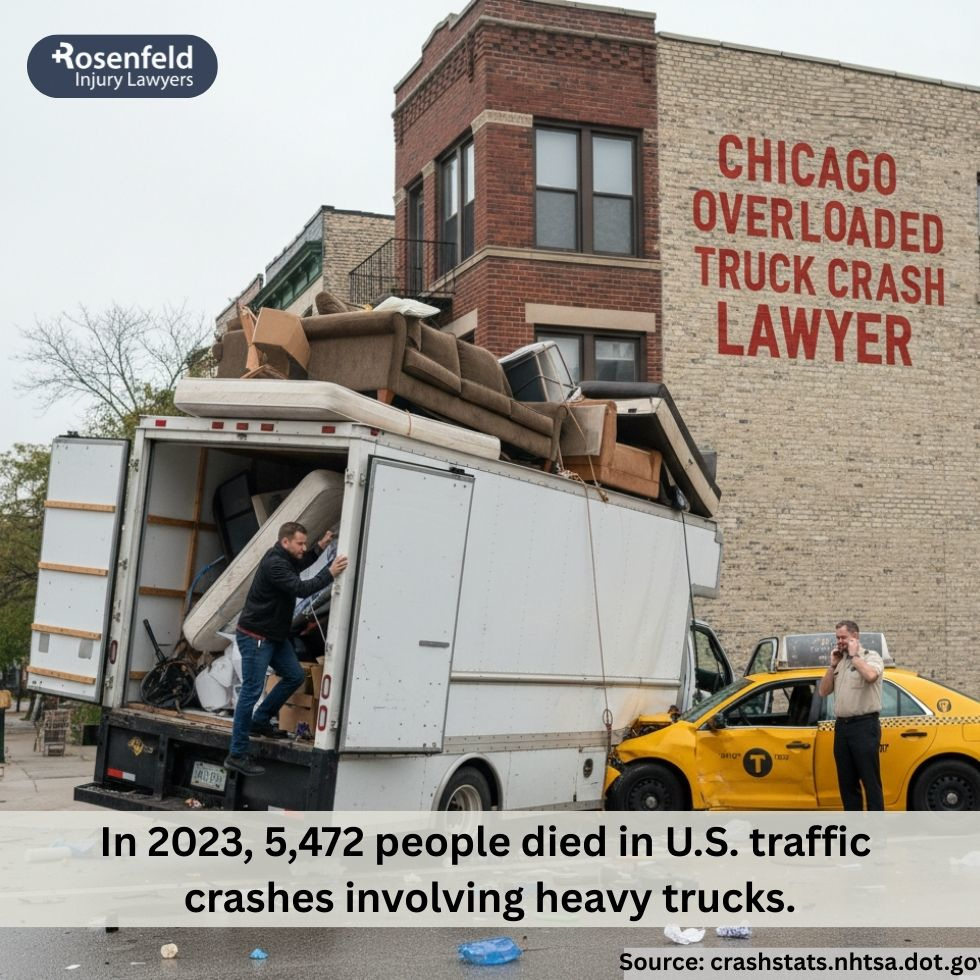
Many people assume truck drivers are the only party responsible, but improper loading often starts somewhere else. In many trucking industry operations, most drivers do not control the loading process. A warehouse, shipper, or logistics company may be the one loading the trailer incorrectly.
If a truck is overloaded, we investigate the shipper and the loading facility. Overloading a truck can happen when a warehouse loads beyond legal limits or ignores tandem axle distribution rules. A tandem axle setup has specific limits, and putting too much weight onto an axle can create weight violations even when the gross weight seems close.
In overweight truck accidents, this is where multiple parties may share liability. Trucking companies may also be responsible when they accept an overloaded load, bypass weight checks, or pressure drivers to move freight despite overweight trucks.
Improper loading is not only about the weight on the trailer. It is also about how the cargo is secured. When cargo shifts, the truck’s center and center of gravity can change mid-turn or mid-brake. That can lead to rollover accidents, jackknifes, and loss of control that harms other drivers and other vehicles.
If shifting loads played a role, our truck accident lawyers examine whether the cargo was loaded properly and whether improperly loading practices created an unstable center of gravity. This is also where link overloading issues can connect to broader safety breakdowns.
Overweight truck accidents are provable. The weight is not guesswork. It is documented, tracked, and often recorded in multiple places.
We pull the bill of lading and shipping paperwork to identify what the truck carries and the amount of weight assigned. These documents can show the exact load, the originating facility, and the stated weight used for transport. They also help identify responsible parties for loading decisions.
We also examine weigh station compliance. We check records, bypass data, and any scale tickets available. If the truck driver bypassed a weigh station or avoided scales, that can support an argument that the driver and trucking companies knew the truck’s weight exceeded weight limits.
In addition, we look for weigh station evidence tied to the route. This can include times when the truck should have stopped and whether the system shows a bypass.
In many cases, the scene itself shows signs of excess weight. Brake heat damage, severe tire wear, tire blowouts, and suspension damage can support the theory that the truck’s weight created mechanical failures. Our personal injury lawyers gather evidence quickly because trucks get repaired and loads get moved.
Overloaded truck accidents can cause catastrophic injuries because the truck has more momentum and the crash forces are higher. Common severe injuries include traumatic brain injuries, spinal trauma, fractures, and internal injuries. These cases also create heavy financial losses, including medical bills, ongoing medical treatment, and lost wages or lost income.
Because these crashes are preventable, our goal is to recover compensation that reflects the full harm. That includes medical costs, wage loss, and personal injury damages tied to long-term limitations.
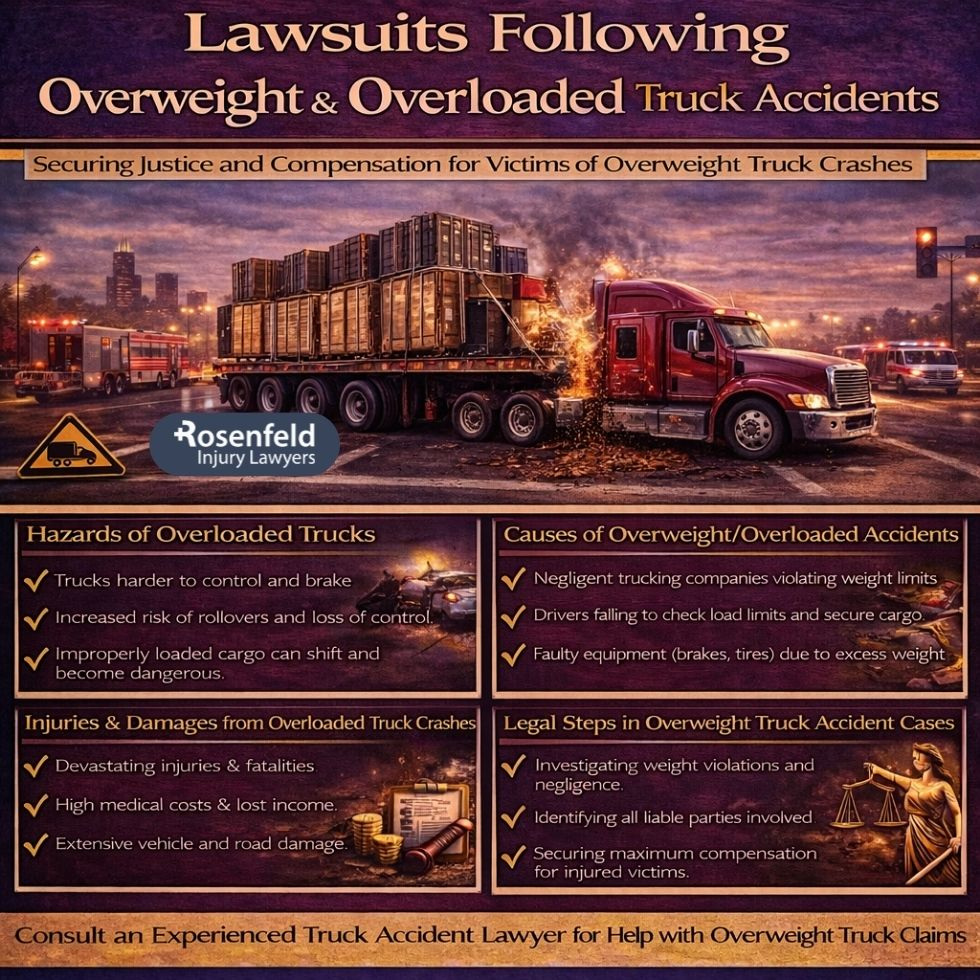
Greed causes overloading. If a heavy truck could not stop in time, we investigate the weight.
If you were injured in a truck accident involving overloaded trucks or overweight trucks, contact our truck accident lawyer team to help you recover damages. We will gather evidence, secure cargo and scale records, and identify every party that contributed to the excessive weight and the accident caused by it.
Our personal injury lawyers handle overloaded truck accidents by focusing on the proof. Weight limits exist to protect the public. When a trucking company or loader breaks those limits and someone gets hurt, we hold them responsible and pursue the damages you need to recover.
All content undergoes thorough legal review by experienced attorneys, including Jonathan Rosenfeld. With 25 years of experience in personal injury law and over 100 years of combined legal expertise within our team, we ensure that every article is legally accurate, compliant, and reflects current legal standards.