

Chicago Personal Injury Lawyer
Award-Winning Chicago Personal Injury Lawyer - Securing Justice
for Illinois Injury Victims - Over $450 Million Recovered



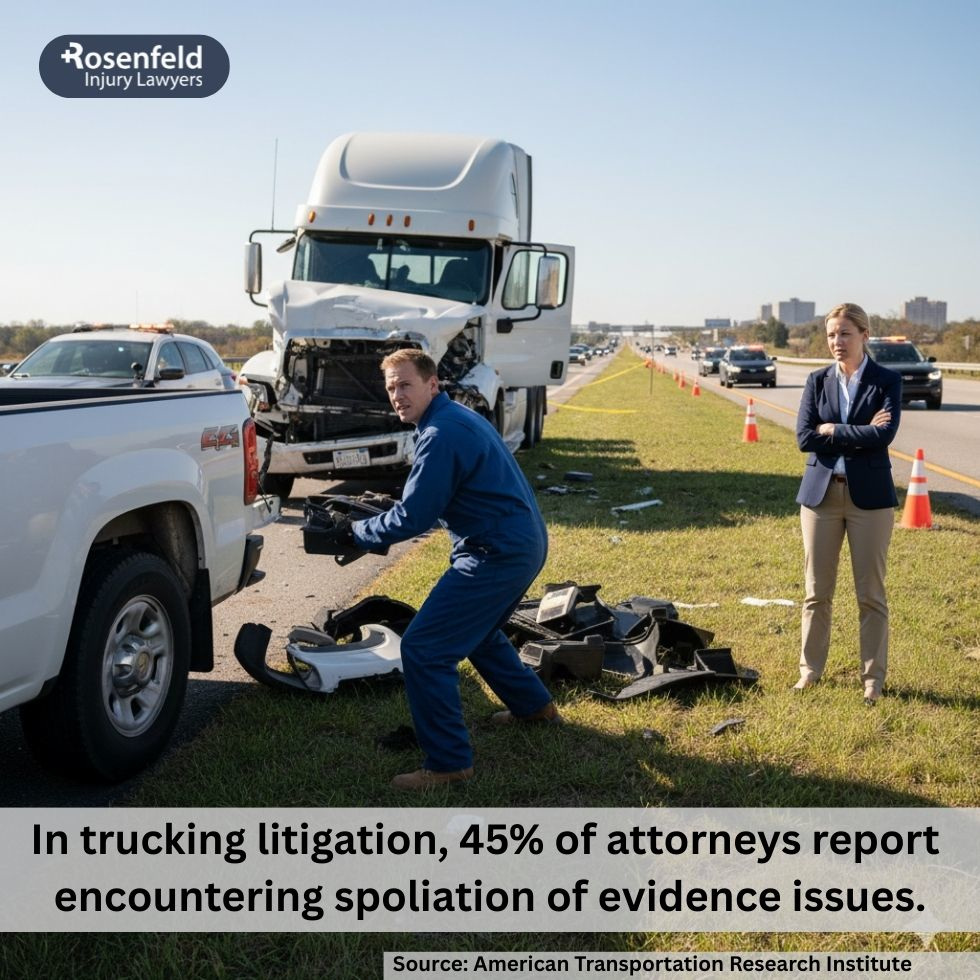
In serious truck crashes, evidence does not disappear on its own. It gets deleted, overwritten, or quietly destroyed, often within days. That is why we treat the first 48 hours like a countdown clock. If critical data is not preserved immediately, it may be gone before a lawsuit is even filed.
HIGHLIGHTS:
Trucking companies run on systems designed for operations, not accountability. Many carriers use dash cam platforms and telematics systems that overwrite recordings on a rolling loop. Some retain only a short window of event-triggered footage. Others store critical driving data in formats that can be reset, wiped, or lost if the truck is returned to service.
That is why we do not wait for a police report to come back or for an insurance adjuster to gather information. The first move is legal. We send a preservation letter that demands the carrier lock down the evidence before it can be altered or deleted.
Most commercial trucks capture pre-crash activity through an Engine Control Module (ECM) or similar system. That data can answer questions the trucking company often tries to reframe:
In other words, the ECM can expose whether this was avoidable, and whether the driver’s story matches the mechanics.
Dash cam footage is some of the most powerful evidence in a truck accident case, and also some of the easiest to lose. Many systems overwrite video quickly, sometimes within 24 to 72 hours, especially if the vehicle is put back into service or the camera is operating on a continuous loop.
When that footage disappears after the carrier has notice to preserve it, the issue is no longer availability. It becomes spoliation.
A preservation letter, sometimes paired with a formal litigation hold notice, is the legal tool that forces a carrier to stop normal deletion policies and preserve all potentially relevant evidence. This is not a polite request. It is written notice that litigation is anticipated and that destruction of evidence can trigger sanctions.
A strong preservation demand targets more than just the black box. It typically includes:
This evidence forms the spine of a truck accident liability case, especially when a carrier tries to shift blame onto the injured driver.
Spoliation is not always dramatic. In trucking cases, it often happens quietly through standard practice:
The legal problem is the same. Evidence relevant to pending litigation is destroyed, intentionally or negligently, after the carrier knew or should have known it needed to be preserved.
When a carrier fails to preserve evidence after receiving a preservation letter, the consequences can be severe. Courts can impose sanctions and, in many cases, allow a legal inference that the missing evidence would have been unfavorable to the party who destroyed it.
That matters because trucking companies often defend cases by controlling the narrative. They claim the crash was unavoidable, blame a sudden emergency, or point to the victim’s driving. Missing dash cam or ECM evidence can be the difference between competing stories and provable facts.
In Chicago truck crashes, especially on high-risk corridors like I-55, GPS and telematics data can do more than confirm location. It can help prove lane behavior, merge timing, and position leading into the collision sequence.
If you suspect a truck’s dash cam or ECM data will be lost, you are not being paranoid. You are being realistic. The safest assumption is that the clock is already running.
The preservation letter is the first move that stops lawful deletion policies and locks evidence in place before it is gone.
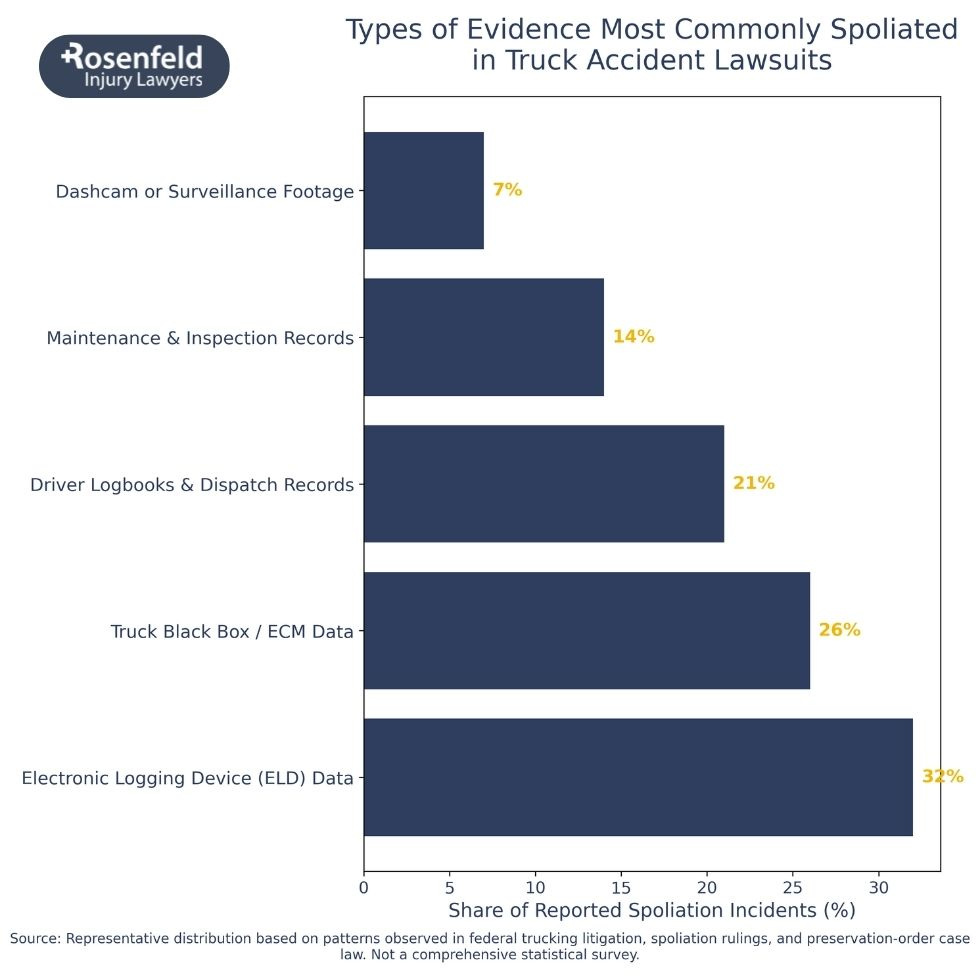
Trucking companies and their insurers move fast after a serious crash, often before you have had a chance to get medical care or even process what happened. Our job is to move faster.
Our Chicago truck accident lawyers treat evidence preservation as the first liability fight, because once dash cam footage is overwritten or ECM data is lost, you do not get a second chance to prove what the truck did in the seconds before impact.
When we take a case, we immediately issue a mandatory preservation letter and pursue the data that carriers are most likely to lose, including the black box (ECM) records, dash cam footage, GPS and telematics, driver logs, and dispatch communications.
We also push to secure the tractor-trailer itself before it is repaired, returned to service, or scrapped. That early action is not paperwork. It is how we lock down the facts, expose violations, and build the foundation for truck accident liability.If you or a family member were hurt in a crash involving a commercial truck, do not assume the evidence will still be there tomorrow. Contact us as soon as possible so our experienced personal injury lawyers can trigger a litigation hold, preserve the data, and protect your case before the 48-hour clock runs out.
All content undergoes thorough legal review by experienced attorneys, including Jonathan Rosenfeld. With 25 years of experience in personal injury law and over 100 years of combined legal expertise within our team, we ensure that every article is legally accurate, compliant, and reflects current legal standards.